SUNDI TOOLS
- Copyright © Wuxi Sundi Precision Tools Co.,LTD All rights reserved.
- Site Map
Choosing the right DTF Transfer Film Rolls (DTF Film) is more practical than simply comparing prices. Film affects ink release, powder bonding, color strength, washing durability, and production speed. A roll may look smooth under warehouse lighting, yet perform poorly on cotton after pressing.
DTF printing consultant Andy MacDougall states, “The film is part of the printing system, not just a disposable carrier.” This principle deserves attention. Printers should examine cold-peel, hot-peel, and warm-peel films separately. They should also consider matte and glossy surfaces, single-sided and double-sided coatings, stretch film, anti-static film, and films designed for fine-detail graphics. Those differences become visible on a black hoodie, especially around small white letters and thin outlines.
This guide introduces ten practical types of DTF film rolls for buyers. Each type has a useful place, but none is perfect. A low-cost film can reduce expenses. It can also create powder waste, weak adhesion, or uneven edges. That trade-off is easy to miss.
Check the coating consistency first.
Then test real garments.
A reliable evaluation should include roll width, thickness, release behavior, drying conditions, storage requirements, and compatibility with the printer and powder. Small test runs are wiser than immediate bulk purchasing. Humidity, curing temperature, and operator technique can change results significantly. Even experienced printers sometimes blame the film too quickly. The press settings may be the real problem.
The following overview focuses on observable performance, buyer experience, and production risks. It aims to help workshops choose with evidence, not attractive packaging or vague supplier claims.
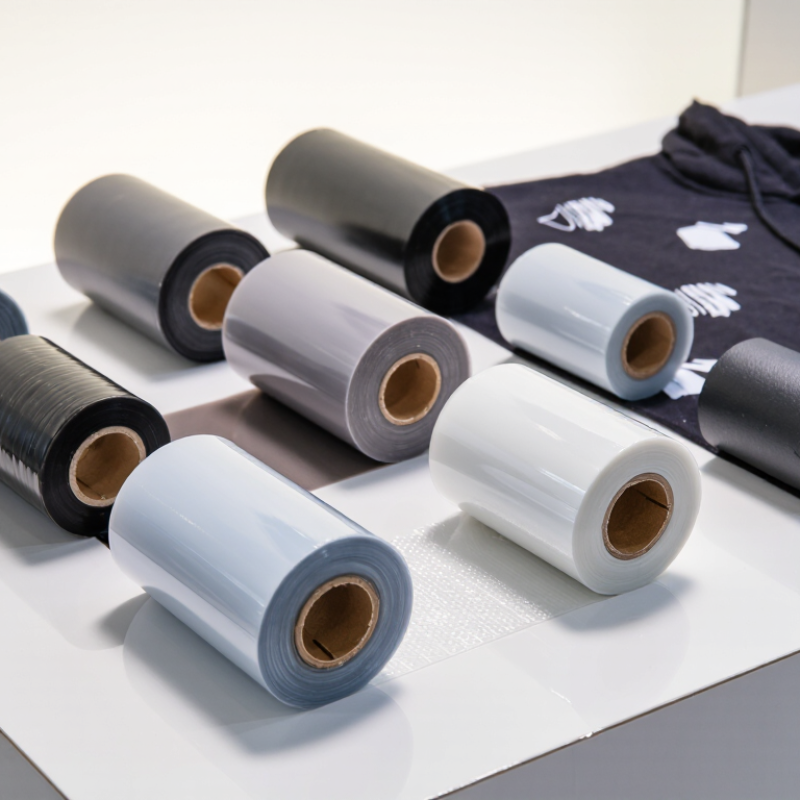
DTF transfer film rolls are coated PET sheets used to move printed designs onto fabric. The printer places white and colored ink on the coated side, usually in a mirrored layout. Adhesive powder then bonds to the wet ink. Controlled heating melts the powder into a smooth, flexible layer. After curing, a heat press transfers the design to cotton, polyester, blends, and similar textiles.
Film performance depends on its coating, thickness, surface finish, and release behavior.
Common choices include cold-peel, hot-peel, instant-peel, glossy, matte, stretch, anti-static, high-release, textured, and low-temperature films.
Cold-peel film needs cooling before removal, while hot-peel film can be removed shortly after pressing. That difference affects production speed.
A matte surface can reduce glare, but it may feel slightly different on dark fabric.
Buyers should test film with their printer, ink, powder, and heat press settings. Check whether the roll feeds evenly without curling or static. Examine fine lettering under bright light.
Poor coating can cause pinholes, powder gaps, or weak edges after washing. A practical wash test should include several cycles, not one quick rinse.
Film specifications help, but they never replace a controlled sample test. I have seen promising samples fail after incorrect curing, and that remains an easy mistake to underestimate.
Temperature, pressure, dwell time, and peeling direction all deserve written records.
Top 10 Types of DTF Transfer Film Rolls for Buyers
How DTF Film Rolls Are Classified by Surface and Finish
DTF transfer film rolls are commonly classified by surface texture, coating, and release finish. A glossy surface reflects light and supports bright, sharp artwork. It often suits colorful logos and detailed lettering. Matte film reduces glare and creates a softer, fabric-like appearance. It can be easier to inspect under strong workshop lighting. Semi-matte film sits between both options, but results may vary with ink volume and curing temperature.
Some films have a frosted surface for improved powder control. Others use an anti-static treatment to reduce loose powder and film sticking. Hot-peel and cold-peel films describe release timing, not surface appearance. Hot-peel film may speed production, while cold-peel film can offer a calmer separation process. The coating must hold white ink evenly. Uneven coating may cause pinholes, weak edges, or cloudy colors. Small samples matter.
Tips: Ask for a coated sample before ordering full rolls. Test fine lines, large white areas, and dark cotton fabric. Check peeling after pressing and cooling. Record temperature, pressure, and dwell time. A finish that looks excellent on polyester may feel different on cotton. Film selection is not perfectly predictable. Even experienced operators sometimes adjust curing settings after changing suppliers, humidity, or artwork coverage. Keep a short test log.
DTF film rolls are commonly classified by surface appearance, release behavior, and special finish. The chart compares representative nominal film thicknesses, a practical buying dimension that affects handling, durability, and compatibility with different powder and printing processes.
Thickness values are typical reference figures in micrometres and can vary by supplier and production specification. Matte, glossy, frosted, and textured surfaces describe the finish, while hot-peel, cold-peel, and anti-static properties describe functional performance; these classifications may overlap.
Ten main types of DTF transfer films serve different printing and pressing conditions. Hot-peel film releases immediately after pressing, while cold-peel film needs complete cooling. Warm-peel film sits between them and can improve production speed. Matte film reduces glare and gives garments a soft, low-shine appearance. Glossy film creates a brighter surface and makes colors look more vivid. Each choice changes the final texture.
Anti-static film helps reduce powder movement and dust attraction during printing. Stretchable film suits sportswear and flexible fabrics because it follows fabric movement better. Glitter-effect film adds reflective particles for decorative graphics. Glow-effect film stores light and produces a visible effect in dark settings. Embossed film can create a raised surface, adding tactile detail to simple artwork. The effect is noticeable.
Buyers should check coating uniformity, roll edges, release behavior, and storage requirements. A clean film surface matters. Test a small transfer before ordering full rolls. In practical production, temperature, pressure, powder coverage, and fabric composition affect results as much as film type. A film that performs well on cotton may behave differently on nylon or coated fabric. I have found that “universal” claims deserve careful testing. Even experienced operators sometimes adjust peeling time by a few seconds. That small change can prevent lifting, dull color, or rough edges. Reliable suppliers should provide technical data, sample rolls, and consistent batch quality.
Top 10 Types of DTF Transfer Film Rolls for Buyers
Matching film rolls to fabric starts with fiber behavior, not appearance. Textile Exchange reported that global fiber production reached 124 million tonnes in 2023. Polyester represented about 59% of that volume, while cotton accounted for roughly 22%. This matters because polyester can react to heat and pressure differently from cotton. For cotton T-shirts, choose a standard PET film with reliable adhesive coverage. For polyester, test low-temperature film to reduce dye migration and scorching.
Stretch fabrics need flexible film and elastic adhesive powder. Otherwise, a printed logo may crack when the garment bends across the chest. A matte roll can reduce glare on athletic wear, while glossy film may suit smooth promotional textiles. Hot-peel film speeds production, but cold-peel film can offer greater control during manual pressing. Small details matter.
Check the fabric first.
Smithers’ industry analysis identifies polyester and blended textiles as important growth areas for digital textile printing. That supports keeping several film types available, rather than forcing one roll onto every garment. In my testing, a 90/10 cotton blend often needs different pressure from heavy cotton fleece. I would not trust a color chart alone. Wash testing remains essential. Three cycles can expose weak adhesion, edge lifting, or unexpected color change. Even experienced operators sometimes overlook fabric coatings, and that mistake is expensive.
| No. | DTF Film Roll Type | Surface and Coating | Peel Behavior | Typical Thickness | Best Fabric Matches | Recommended Printing Needs | Typical Starting Transfer Window | Buyer Checks |
|---|---|---|---|---|---|---|---|---|
| 1 | Standard Matte Hot-Peel Film | Single-sided matte PET with a standard hot-melt powder coating. | Peel shortly after pressing while the film is still warm, if the coating specification allows. | 75–100 μm | Cotton, polyester, cotton-polyester blends, and common light or dark garments. | General-purpose apparel, moderate production volumes, and soft matte graphics. | Usually about 140–160°C for 10–15 seconds; confirm with the powder and ink system. | Check stable powder adhesion, clean release, even coating, and resistance to edge lifting. |
| 2 | Standard Matte Cold-Peel Film | Matte PET designed to remain attached until the transfer cools. | Allow the garment and film to cool before peeling. | 75–100 μm | Cotton, polyester, blends, fleece, and fabrics that benefit from a controlled release. | Detailed artwork, small lettering, and production where immediate peeling is inconvenient. | Usually about 140–160°C for 10–15 seconds, followed by complete cooling. | Verify the required cooling time, release force, and whether a second pressing is recommended. |
| 3 | Instant-Peel Matte Film | Fast-release matte coating formulated for quick film removal. | Peel immediately after pressing when the transfer is ready for release. | 75–95 μm | Cotton, polyester, blends, and high-throughput garment orders. | Short cycle times, on-demand production, and workflows with minimal cooling space. | Often about 140–160°C for 8–15 seconds; use a test press before production. | Test for incomplete powder melting, stretching during release, and image distortion. |
| 4 | Glossy Hot-Peel Film | Smooth or glossy PET that produces a brighter surface appearance. | Normally peeled warm after pressing, according to the coating instructions. | 75–100 μm | Smooth cotton, polyester, nylon-compatible garments, and promotional apparel. | Brighter-looking graphics, saturated colors, and designs requiring a smoother visual finish. | Usually about 140–160°C for 10–15 seconds; compatibility testing is essential for nylon. | Inspect gloss uniformity, color appearance, powder coverage, and resistance to surface scuffing. |
| 5 | Double-Sided Matte Anti-Slip Film | Matte coating on the print side with a less slippery reverse side for better handling. | Available in hot-peel or cold-peel constructions; follow the specific roll specification. | 75–100 μm | Cotton, blends, fleece, and garments that are difficult to position accurately. | Manual alignment, multi-piece layouts, small worktables, and reduced film movement during cutting. | Commonly about 140–160°C for 10–15 seconds. | Confirm that the reverse side does not stick to the platen and that the film feeds smoothly. |
| 6 | Anti-Static Film | PET with an anti-static treatment to reduce electrostatic attraction. | Can be hot-peel or cold-peel depending on the product construction. | 75–100 μm | Polyester and synthetic garments, especially in dry production environments. | Reducing film curl, dust attraction, powder scatter, and feeding problems during printing. | Usually about 140–160°C for 10–15 seconds. | Assess static performance under the local humidity, printer feeding stability, and surface cleanliness. |
| 7 | Low-Temperature Transfer Film | Coating engineered to melt and bond at a lower press temperature than standard systems. | Hot-peel, cold-peel, or instant-peel depending on the coating design. | 75–100 μm | Heat-sensitive polyester, coated textiles, performance garments, and fabrics prone to scorching. | Reducing dye migration, fabric shine, shrinkage, or heat damage during pressing. | Often about 120–140°C for 8–15 seconds; exact settings must be validated. | Test wash durability, dye migration, powder melting, and adhesion at the lower temperature. |
| 8 | High-Temperature Resistant Film | PET and coating selected for higher heat exposure and dimensional stability. | Usually cold-peel or controlled hot-peel, depending on the adhesive layer. | 75–125 μm | Heat-stable cotton, heavy cotton, canvas, workwear, and dense textiles. | Thicker fabrics, demanding bonding conditions, and applications requiring a higher press temperature. | Often about 155–170°C for 10–20 seconds; avoid overheating the garment. | Confirm dimensional stability, adhesive flow, release performance, and compatibility with the press. |
| 9 | Stretch and Elasticity-Optimized Film | Flexible matte coating and adhesive system designed to move with the fabric. | Often cold-peel or controlled hot-peel to reduce distortion during release. | 75–100 μm | Spandex blends, sportswear, leggings, swimwear, and stretch cotton garments. | Large graphics, flexible logos, repeated garment movement, and reduced cracking after stretching. | Commonly about 130–150°C for 10–15 seconds; use the lowest effective setting. | Stretch the print after curing, inspect for cracking, and verify wash durability and rebound. |
| 10 | Soft-Hand Lightweight Film | Thin matte PET and a lower-build adhesive coating intended to reduce transfer stiffness. | Typically hot-peel or instant-peel, depending on the adhesive formulation. | 50–75 μm | Lightweight cotton, fine polyester, fashion garments, and fabrics where drape is important. | Large solid designs, premium-feel apparel, thin shirts, and applications requiring less noticeable film. | Usually about 135–155°C for 8–15 seconds. | Check powder coverage, liner strength, curling, print-through, and whether the thin film releases evenly. |
Note: Thickness, peel temperature, pressing time, roll width, and roll length vary by coating formulation and production process. The temperature ranges above are practical starting points rather than universal specifications. Always test adhesion, stretch resistance, color migration, and wash durability on the actual fabric before full-scale production.
Top 10 Types of DTF Transfer Film Rolls for Buyers
Key Factors for Comparing and Selecting DTF Film Rolls
DTF transfer film rolls differ in coating, surface finish, peel behavior, thickness, and usable width. These details affect color, powder bonding, curing, and final fabric feel. For buyers, the cheapest roll can become expensive after failed prints. Start with the application. Choose matte film for reduced glare or glossy film for sharper visual contrast. Hot-peel and cold-peel options require different timing, so follow controlled test settings.
Check the film’s thickness, usually measured in microns, and inspect its coating consistency. Uneven coating can create pinholes, weak adhesive areas, or patchy ink absorption. A practical test should include fine text, solid black areas, gradients, and repeated washing. Measure transfer clarity after curing, pressing, and cooling. Also examine static buildup, edge curling, roll winding, and packaging protection. Small defects can interrupt production.
I have found that supplier claims are only a starting point. Ask for technical data, batch information, storage guidance, and sample rolls. Then test the film with your own ink, powder, printer, and fabric. Results may change with humidity and heat. That part is easy to underestimate. A film that performs well on cotton may behave differently on polyester or blended textiles. Keep test records, but stay open to revising your choice when production conditions change.