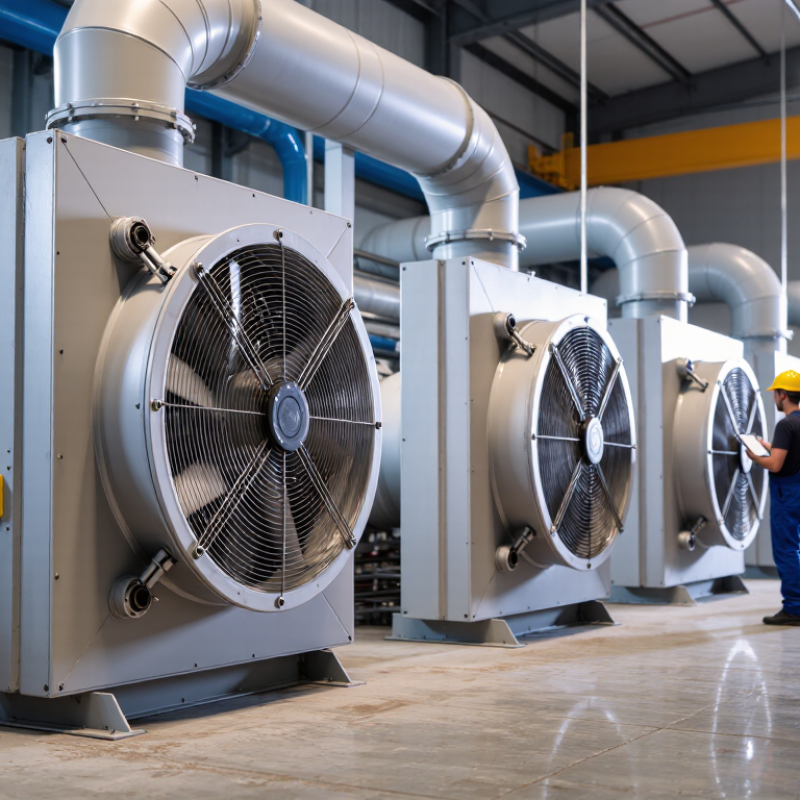
...

Top Explosion Proof Fan Manufacturers for Global Buyers?

Choosing among the top Explosion-Proof Fan manufacturers requires more than comparing prices or motor ratings. Global buyers need evidence of engineering quality, field experience, and dependable after-sales support. A fan may look robust in a product photograph. Its real value appears inside a dusty plant, a chemical room, or a grain-processing facility.

Professor James Reason, a respected safety and human-factors expert, wrote, “We cannot change the human condition, but we can change the conditions under which humans work.” This principle applies directly to Explosion-Proof Fan selection. Buyers should examine enclosure design, motor protection, airflow performance, temperature classification, materials, and testing records. Certification details must match the intended hazardous environment. They should also confirm whether the manufacturer offers traceable documentation and practical maintenance guidance.

Small details matter. Check the impeller balance. Inspect the cable entry. Ask how the fan performs after long operating hours. Reliable manufacturers can explain these points clearly, without hiding behind vague claims. Their engineers should understand ventilation, corrosion, vibration, and combustible atmospheres. Factory audits, reference projects, and documented quality procedures can strengthen that judgment.

Still, no comparison is perfect. Catalog data may not reflect every installation condition. A trusted brand can also make a poor recommendation when site information is incomplete. That is why this guide considers technical capability, manufacturing consistency, certification discipline, customization, delivery reliability, and buyer support together. The strongest suppliers are not merely selling equipment. They are helping reduce operational uncertainty. That difference deserves careful attention.

Top Explosion Proof Fan Manufacturers for Global Buyers?

Explosion-Proof Fan Fundamentals: ATEX Zones, IECEx Certification, and IP Ratings

Selecting an explosion-proof fan begins with the hazardous area, not the catalog page. ATEX zoning identifies how often an explosive atmosphere may occur. Gas zones include 0, 1, and 2; dust zones include 20, 21, and 22. Zone 0 or 20 requires equipment designed for continuous or frequent exposure. Zone 2 or 22 allows less frequent risk, but installation discipline still matters. Check the equipment category, protection method, gas or dust group, and temperature class against the site assessment.

IECEx certification adds an internationally recognized verification route, but the certificate must match the actual fan configuration. Verify the certificate number, Ex marking, motor type, temperature limits, and permitted operating conditions. A certified motor does not automatically certify the complete fan assembly. This detail is often missed. It can create an expensive compliance gap.

IP ratings address protection against solid particles and water, not ignition hazards. IP55 may resist dust and water jets, while IP66 offers stronger sealing. Neither rating replaces ATEX or IECEx approval. Airflow, static pressure, bearing temperature, vibration, and maintenance access also deserve attention. In a dusty workshop, a poorly sealed cable entry can undermine an otherwise suitable design. Selection is rarely perfect on the first review. Recheck assumptions with the hazardous-area dossier, electrical drawings, and the fan’s full technical file.

How Temperature Classes T1–T6 Govern Hazardous-Area Fan Selection

For global buyers, temperature class is a critical filter when choosing explosion proof fans. It defines the highest permitted surface temperature during operation.

T1 allows up to 450°C
T2 limits surfaces to 300°C
T3, T4, T5, and T6 reduce the limit to 200°C, 135°C, 100°C, and 85°C.

A fan suitable for a T4 area must keep every relevant surface below 135°C. Check the motor, housing, bearings, shaft, and potential friction points. Do not judge the fan by motor temperature alone.

Ambient heat, blocked airflow, dust buildup, and frequent starts can raise operating temperatures. From field inspections, poor ventilation around the motor is a surprisingly common problem.

The hazardous gas determines the required class, not the fan supplier’s catalog wording. A T6 fan may suit a T4 location, but a T4 fan is not automatically safe in a T6 location.

Confirm gas group, area classification, ambient range, certification scope, and maintenance conditions with a qualified engineer.

T1–T6 ratings mainly address gases and vapors; combustible dust requires separate assessment.

A spreadsheet may look complete, yet overlook a small access cover or hot bearing. That detail can change the selection.

Temperature margin matters. Wider margin is usually wiser.

Comparing Global Manufacturers by Airflow, Pressure, Efficiency, and Noise

Choosing among top explosion-proof fan manufacturers requires more than comparing catalog airflow. Airflow shows how much air a fan moves, while pressure indicates its ability to overcome ducts, filters, dampers, and grilles. A reliable comparison uses the same operating point. One fan may claim 12,000 m³/h, but deliver far less after installation resistance.

Efficiency Efficiency also deserves careful attention. Review motor input, fan curve, duty point, and control method together. Variable-speed control can reduce energy use during partial loads, but poor sizing may create unstable operation.

Noise & Field Experience Noise matters. Ask for sound-pressure data, test distance, and octave-band results. A low decibel figure without testing conditions is incomplete evidence. Field experience often reveals vibration problems that brochures overlook.

Tips: Request third-party test reports, material specifications, maintenance intervals, and applicable hazardous-area certification. Confirm whether airflow and pressure values were measured with clean filters and fully open dampers. Ask manufacturers to provide acoustic data at the expected installation distance. Check spare-part availability in your region, because a technically excellent fan can become impractical during long service delays. I would also compare warranty terms carefully; they rarely receive enough attention.

Explosion-Proof Motor Standards: NEC Class I Divisions and IECEx Zones

Selecting an explosion-proof fan begins with the atmosphere, not the airflow chart. NEC Class I locations cover flammable gases, vapors, or liquids. Division 1 indicates exposure during normal operation or frequent maintenance. Division 2 generally means hazardous material appears only during abnormal conditions.

IECEx uses zones instead. Zone 0 allows a hazardous atmosphere continuously or for long periods. Zone 1 expects occasional presence. Zone 2 expects presence only briefly. These systems are not interchangeable. A fan marked for Class I, Division 1 should not automatically be accepted for Zone 1 service. Check the certificate, gas group, temperature class, equipment protection level, and ambient limits. Small details matter.

Motor construction deserves close inspection. The enclosure, terminal box, cable glands, bearings, and thermal protection must suit the classified location. During equipment reviews, I have found that a correct motor was paired with unsuitable cable entries. That weakens the entire installation. Confirm the required marking on the complete assembly, not only the motor nameplate. Airflow, static pressure, corrosion resistance, and vibration also affect reliability. A neat label can still hide a poor installation. Ask for current test documentation and installation guidance. Some selections remain uncertain until the site’s ventilation pattern, gas properties, and authority requirements are verified.

Top Explosion Proof Fan Manufacturers for Global Buyers? - Explosion-Proof Motor Standards: NEC Class I Divisions and IECEx Zones

Global buyer reference table for selecting explosion-protected fan motors and electrical equipment

Evaluation Dimension NEC Class I, Division 1 NEC Class I, Division 2 IECEx Zone 0 / Zone 1 IECEx Zone 2 Buyer Checkpoint for Explosion-Proof Fans
Hazard Definition Flammable gases, vapors, or liquids may be present under normal operating conditions or frequently during maintenance. Flammable gases, vapors, or liquids are not normally present, but may occur because of abnormal operation, leakage, or equipment failure. Zone 0: explosive gas atmosphere is present continuously, for long periods, or frequently. Zone 1: likely to occur occasionally during normal operation. Explosive gas atmosphere is not likely during normal operation, but may exist for a short period if it occurs. Obtain the site hazardous-area classification before selecting the motor, terminal box, controls, and fan assembly.
Common Protection Concept Equipment must be suitable for frequent exposure to the classified atmosphere and designed to prevent ignition from internal or external sources. Equipment is generally designed to prevent ignition under normal operation and specified abnormal conditions. Zone 0 typically requires the highest equipment protection level; Zone 1 requires equipment suitable for frequent hazardous-gas exposure. Equipment is designed for infrequent or short-duration exposure to an explosive atmosphere. Confirm the complete protection method, such as flameproof, increased safety, pressurization, or another approved method—not only the marketing term “explosion-proof.”
Gas or Vapor Grouping Class I groups are traditionally identified as A, B, C, and D. Group A covers acetylene; Group B includes gases such as hydrogen; Groups C and D cover progressively less severe gas hazards. Uses the same Class I gas-group structure. The selected equipment must match the specific gas group stated for the installation. IEC gas groups are IIA, IIB, and IIC, with IIC representing the most demanding gas subgroup. Grouping is not automatically identical to NEC group letters. The fan and motor must be suitable for the applicable IIA, IIB, or IIC gas group shown on the certificate and nameplate. Ask for the exact gas group, not a generic “gas-safe” statement. Verify that the fan, motor, cable glands, and accessories share compatible ratings.
Temperature Classification Equipment temperature codes commonly range from T1 to T6. T6 has the lowest permitted maximum surface temperature and is generally the most restrictive. The maximum surface temperature must remain below the ignition temperature of the hazardous material under the installation conditions. IEC temperature classes T1–T6 are widely used; T1 permits up to 450°C, while T6 permits up to 85°C, subject to the applicable certification conditions. The selected T-class must be equal to or more stringent than the hazardous gas or vapor requirement. Compare the certified maximum surface temperature with the auto-ignition temperature of the process gas, including expected ambient-temperature effects.
Typical Area Relationship Division 1 is broadly comparable in hazard frequency to Zone 0 or Zone 1, but the classifications are not direct legal equivalents. Division 2 is broadly comparable to Zone 2 in many applications, but the final selection must follow local codes and the project certification basis. Zone classification is based primarily on the probability and duration of an explosive atmosphere, rather than the NEC division terminology. Zone 2 equipment may not automatically be acceptable for Zone 1 or Division 1 installations. Do not convert divisions and zones without review by the project engineer, authority having jurisdiction, or local certification body.
Certification Documentation Documentation should identify the applicable national electrical requirements, product construction, environmental limits, installation conditions, and approved hazardous-location ratings. Review the certificate or listing information for Division 2 suitability, gas group, temperature code, enclosure type, and permitted installation methods. IECEx documentation normally includes a certificate number, protection concept, equipment protection level, gas group, temperature class, and special conditions of use where applicable. Confirm that the certificate explicitly covers Zone 2 and the selected protection level, ambient range, and installation arrangement. Request the certificate, technical schedule, installation manual, dimensional drawing, wiring diagram, and routine-test records before purchase.
Motor and Fan Construction The motor enclosure, shaft seals, bearings, terminal compartment, and fan materials must prevent ignition and withstand the classified environment. The design should address ignition risks from arcing, overheating, friction, loose electrical connections, and abnormal operating conditions. Construction must match the certified protection concept and may require controlled clearances, certified cable entries, and specified fasteners. Even where the risk is lower, the motor and fan must remain within the certificate’s electrical, thermal, and mechanical limits. Check impeller-to-housing clearance, anti-static or spark-resistant materials where required, bearing temperature, vibration limits, and motor overload protection.
Electrical Supply and Controls Starters, switches, variable-frequency drives, sensors, junction boxes, and cable systems must also be approved for the classified location or installed outside it. Control equipment may be installed in the hazardous area only when its ratings and wiring methods are appropriate for Division 2. All associated apparatus, cable glands, and entry systems must be compatible with the zone, protection concept, gas group, and temperature class. Verify whether the control panel and variable-speed drive are suitable for Zone 2 or must be located in a safe area. Evaluate the entire power train as one system; a compliant motor cannot compensate for non-compliant controls or cable entries.
Environmental Performance Selection must consider ambient temperature, humidity, corrosive gases, ingress protection, altitude, and installation outdoors or indoors. The enclosure and coating system must tolerate the site environment while maintaining the certified protection performance. Certificates may specify an ambient range, ingress protection level, ultraviolet resistance, corrosion restrictions, or special installation conditions. Zone 2 suitability does not remove the need to verify environmental and mechanical ratings. Match the fan’s IP rating, corrosion protection, ambient range, airflow duty, noise level, and vibration performance to the site specification.
Recommended Procurement Evidence Hazardous-area rating, certificate or listing, installation instructions, motor data, test records, and evidence of compatibility with the local electrical code. Division rating, gas group, temperature code, enclosure details, wiring method, and documentation for abnormal-condition operation. IECEx certificate, marking details, equipment protection level, gas group, temperature class, ambient range, and special conditions of use. Zone 2 certificate details, protection level, electrical limits, and confirmation that accessories are covered by the certification basis. Use a compliance matrix covering hazardous area, gas group, temperature class, airflow, pressure, motor power, voltage, frequency, enclosure, and documentation.
Important selection note: NEC Class I divisions and IECEx zones use different classification frameworks and should not be treated as automatic equivalents. Final fan and motor selection must be verified against the project’s governing code, hazardous-material data, certificate conditions, and local authority requirements.

Buyer Checklist: Materials, Testing, Compliance Documents, and Warranty Terms

Top Explosion Proof Fan Manufacturers for Global Buyers?

Choosing an explosion-proof fan starts with materials, not the catalog photo. Ask for the impeller alloy, housing steel grade, shaft material, and protective coating. Check spark-resistant clearances and grounding points.

IEC 60079-0 defines equipment requirements for explosive atmospheres, while ISO 5801 supports fan performance testing. Request test curves showing airflow, pressure, temperature, and operating speed.

Compliance documents must match the exact model and motor configuration. Look for a valid IECEx or ATEX certificate, zone classification, gas or dust group, temperature class, and certificate number. A certificate alone is not enough. Confirm production traceability, routine inspection records, and laboratory accreditation. The International Labour Organization estimated 2.93 million work-related deaths globally in 2023, showing why paperwork cannot be treated as decoration. I would also compare noise data and vibration limits, because uncomfortable equipment may be bypassed in real operation.

Tips:

Request a sample nameplate photo before purchase. Ask whether the warranty covers the motor, bearings, coatings, and field installation. Clarify warranty length, spare-part availability, response time, and exclusions for corrosive air. Keep every document in the project file. A small mismatch can matter. Some suppliers provide impressive reports, but omit the tested configuration; that is a warning worth investigating.

en_USEnglish

PCD Inserts

PCBN Inserts

Solid CBN Inserts

PCD Milling Cutter

PCD Drilling Tools

PCD Reamer

Diamond Special Tool

Diamond Dressers