SUNDI TOOLS
- Copyright © Wuxi Sundi Precision Tools Co.,LTD All rights reserved.
- Site Map
Choosing a reliable Firestopping Sealant supplier is a safety decision, not merely a purchasing task. Sealants must protect openings around cables, pipes, ducts, and joints when fire spreads through a building. The stakes are real. NFPA’s Fire Loss in the United States During 2023 report recorded about 1.39 million fires and approximately $22.4 billion in direct property damage. These figures show why passive fire protection deserves careful technical review.
Global construction markets also demand stronger documentation. Industry studies from Grand View Research and MarketsandMarkets describe steady growth in fire protection materials, driven by urban development, renovation, and stricter building requirements. However, market growth does not prove product quality. Buyers should examine test evidence, production controls, technical support, and local approvals. A polished brochure is not enough.
Fit matters. A supplier should explain whether its Firestopping Sealant has been tested under standards such as UL 1479, ASTM E814, EN 1366-3, or equivalent regional systems. The tested assembly matters as much as the sealant itself. Wall type, substrate, penetration size, backing material, and movement can change the final result. UL Solutions, Intertek, and other recognized laboratories provide useful reference points, but certificates still require careful interpretation.
This guide compares leading suppliers for global buyers. It considers product range, compliance records, project experience, logistics, and after-sales support. No supplier is perfect. Some offer excellent testing but limited regional stock; others provide fast delivery but weaker technical guidance. That gap matters. Buyers should verify current certificates, installation instructions, and warranty terms before approving any product.
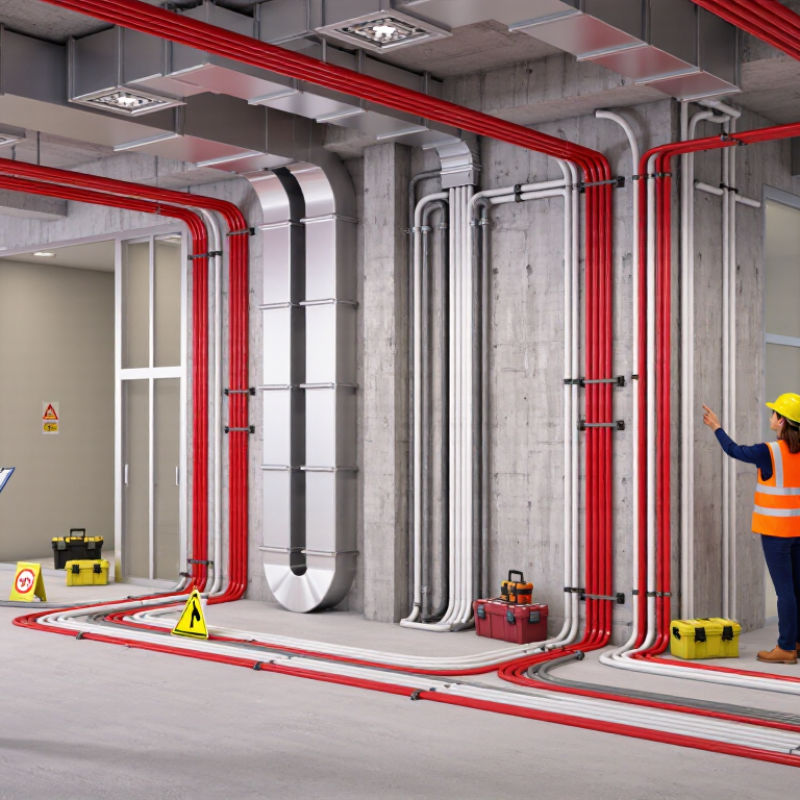
Firestopping sealants close gaps around pipes, cables, ducts, and joints in fire-rated walls and floors. They help limit flames, smoke, and hot gases during a fire. Some formulations expand when heated, while others remain flexible as buildings move. The difference matters.
A small gap can become a dangerous path. Fire can travel through an unsealed cable opening within minutes. A proper sealant works with backing materials, collars, wraps, or sleeves as part of a tested firestop system. The sealant alone is not always enough. Its performance depends on the substrate, opening size, penetration type, and installation depth.
Global buyers should request test reports, technical data sheets, and clear installation instructions. Relevant approvals may follow regional standards, so local code checks remain essential. Field inspections often find clean-looking beads with incorrect thickness or missing backing material. A neat finish can still fail. Product selection also requires attention to movement, moisture, temperature, and chemical exposure. Silicone may suit movement-heavy joints, while acrylic products may fit certain interior applications. These choices should follow the tested assembly, not habit.
Suppliers should provide batch information, storage guidance, and practical installer training. Expired or poorly stored sealant can lose performance before application. This point is easy to overlook. Reliable documentation supports safer procurement and more consistent results across projects.
Global buyers should assess firestopping sealant suppliers through tested systems, not attractive product sheets. A 2023 National Fire Protection Association report recorded 1,504,500 fires in the United States during 2022. That figure shows why small penetrations and joints deserve serious technical review.
Request test reports for the exact wall, floor, pipe, cable, and joint configuration. Check fire duration, movement rating, smoke performance, substrate limits, and installation temperature. Ask whether an independent laboratory issued the report. ISO 17025 accreditation strengthens confidence in laboratory competence. It does not prove every product claim. That distinction matters.
Supplier quality also appears in daily details. Review batch numbers, shelf life, storage instructions, safety data, and production traceability. The 2023 ISO Survey reported more than 1.2 million ISO 9001 certificates worldwide, but certification alone cannot replace project-specific evidence. Speak with technical staff before purchasing. Their answers should match the tested assembly, not generic marketing language. Request installation guidance for humid sites, cold warehouses, and uneven openings. Ask for local-language documents where needed.
Price comparisons can mislead. A cheaper sealant may require more labor, primers, or replacement work. Buyers should compare installed cost and documented performance. Some supplier claims remain unclear. That is a useful warning, not a minor inconvenience. A practical trial on representative substrates can expose adhesion problems before shipment. Feedback from installers is valuable, although it should be recorded rather than accepted casually.
Global buyers usually compare three supplier types: manufacturers, specialist distributors, and local fire-protection contractors. Direct manufacturers often provide broader technical data, batch traceability, and project-specific guidance. Distributors add practical value through local stock, faster delivery, and language support. Contractors understand installation conditions best, especially around service penetrations and mixed substrates.
Regional strengths vary considerably. North American suppliers often emphasize tested system designs, detailed submittals, and strict documentation control. European suppliers commonly focus on low-emission formulations, sustainability records, and compact technical specifications. Asian manufacturing hubs may offer flexible production capacity and competitive pricing for large developments. However, buyers should inspect quality consistency, not only the quotation.
Hot and dusty markets require sealants that tolerate difficult storage and site conditions. Suppliers serving the Middle East often provide climate-conscious packaging and application guidance. Latin American distributors can be valuable when local inventory reduces port delays. Regional knowledge matters.
A reliable evaluation should include third-party test reports, installation training, shelf-life data, and responsive technical support. Ask how the supplier handles product changes. That detail is often overlooked. I have seen attractive tenders weaken because documentation arrived late or installers misunderstood joint preparation. Price still matters, but a cheaper cartridge can create costly rework. No supplier is perfect. Buyers should test samples, review project references, and confirm compatibility with the complete firestop system.
Top Firestopping Sealant Suppliers for Global Buyers
Essential Standards, Certifications, and Product Tests
Firestopping sealants protect penetrations, joints, and gaps in fire-rated walls and floors. Their performance depends on the tested system, not the tube alone. The NFPA report Fire Loss in the United States During 2023 recorded 1,388,500 fires and approximately $22.2 billion in direct property damage. These figures show why documented fire resistance matters during procurement.
Global buyers should review test evidence under ASTM E1966 or UL 2079 for joint systems. Penetration seals commonly require testing under ASTM E814 or UL 1479. European projects may require EN 1366-3, EN 1366-4, and classification under EN 13501-2. ISO 834 can support furnace exposure references, but it does not replace a complete product-system assessment. Check fire rating, movement capability, substrate, opening size, backing material, and installation depth. Smoke leakage results also deserve attention.
Tips: Request the full test report, not only a certificate. Confirm the exact wall, floor, pipe, cable, and joint configuration. Check whether aging, water exposure, and hose-stream testing were included. A certificate can still hide a mismatch. This is where mistakes happen. In my experience, installers often focus on the sealant name and overlook joint width or backing density. That oversight can invalidate an otherwise impressive rating. Ask for independent laboratory records, current technical data, and clear installation drawings before comparing suppliers.
| Evaluation Dimension | Buyer Requirement | Relevant Standard or Test Method | What to Verify in Supplier Documentation | Typical Global-Buying Relevance |
|---|---|---|---|---|
| Penetration fire resistance | Sealing around cables, cable bundles, pipes, ducts, and mixed-service penetrations | EN 1366-3; ASTM E814; UL 1479 | A tested system detail showing the exact substrate, service type, opening size, sealant depth, backing material, installation orientation, and fire-resistance period | Critical for commercial buildings, data centers, hospitals, industrial facilities, and infrastructure projects |
| Linear joint protection | Sealing construction and movement joints in fire-rated walls, floors, façades, and compartments | EN 1366-4; ASTM E1966; UL 2079 | Joint width range, movement capability, backing configuration, joint orientation, cyclic movement results, and fire exposure classification | Important where buildings experience thermal expansion, settlement, vibration, or seismic movement |
| Fire classification | Clear classification for integrity, insulation, and smoke-control performance | EN 13501-2; ASTM E814; UL 1479 | Classification report, direct-field-of-application rules, tested duration, and limitations on substrates and service configurations | Helps align product selection with local building regulations and project specifications |
| Smoke leakage control | Resistance to ambient-temperature and elevated-temperature smoke leakage | EN 1366-3 or EN 1366-4 with smoke-control classification; ASTM E814 where applicable | Smoke leakage classification, pressure conditions, test configuration, and compatibility with the fire-rated assembly | Particularly relevant to escape routes, smoke compartments, underground transport, and high-rise buildings |
| Movement capability | Accommodation of repeated joint movement without loss of firestopping performance | ASTM E1966; UL 2079; project-specific movement-cycle requirements | Declared movement percentage, joint geometry, number of cycles, preconditioning, and post-movement fire-test results | Essential for curtain-wall perimeters, precast panels, parking structures, and seismic regions |
| Substrate compatibility | Reliable adhesion to concrete, masonry, gypsum systems, metals, and approved coated surfaces | Manufacturer adhesion testing; ASTM C920 performance criteria where applicable; project-specific fire-test evidence | Primer requirements, surface preparation, adhesion or cohesion results, moisture limitations, and approved substrate list | Reduces installation failures caused by dusty, damp, porous, painted, or chemically incompatible surfaces |
| Sealant technology | Selection between acrylic, silicone, hybrid, or intumescent formulations based on the application | Product-specific fire-resistance testing; ASTM C920 for elastomeric sealant properties where applicable | Cure chemistry, application temperature, curing time, shrinkage, elasticity, intumescence behavior, and chemical compatibility | Supports correct specification for interior joints, wet areas, façades, service penetrations, and high-movement locations |
| Environmental durability | Resistance to humidity, water exposure, temperature variation, UV exposure, and aging | EN 1366-3 or EN 1366-4 durability conditioning; manufacturer weathering and aging data | Exposure limitations, service-temperature range, water-resistance data, UV suitability, and validated life-expectancy information | Important for façades, car parks, plant rooms, tunnels, marine environments, and unconditioned spaces |
| Chemical and corrosion compatibility | No harmful reaction with cable jackets, insulation, metal pipes, coatings, or adjacent sealants | Product compatibility testing; applicable material safety and electrical-installation requirements | Compatibility statement, corrosivity information, plasticizer interaction data, and restrictions for sensitive metals or polymers | Reduces risk in electrical rooms, laboratories, cleanrooms, industrial plants, and process facilities |
| Health and safety compliance | Safe handling, installation, curing, and disposal in the destination market | Safety Data Sheet under the destination-market chemical communication rules; VOC testing where specified | Current SDS, hazard classification, VOC data, personal protective equipment guidance, and transport information | Required for procurement approval, site safety planning, customs documentation, and contractor training |
| Quality management | Consistent batch quality and traceable manufacturing controls | ISO 9001 quality-management certification; batch testing and inspection records | Certificate scope, manufacturing location, batch or lot traceability, shelf-life controls, and nonconformance procedure | Useful for approved-vendor programs, regulated projects, and long-term framework purchasing |
| Installation productivity | Practical packaging, tooling, cure speed, and application consistency | Technical data sheet requirements; application trials; project-specific installation method statements | Cartridge or sausage-pack sizes, coverage rate, tooling window, cure time, nozzle requirements, and substrate preparation steps | Affects labor cost, installation scheduling, waste, inspection outcomes, and site productivity |
| Technical support and traceability | Accessible engineering support and documentation for international projects | Third-party test reports, engineering judgments where permitted, installation drawings, and inspection records | Document revision control, multilingual instructions, approved-system drawings, response time, and project submittal support | Helps buyers manage different codes, authorities having jurisdiction, contractors, and inspection procedures |
| Packaging and logistics | Stable supply, export-ready packaging, and controlled storage conditions | Product shelf-life and storage specifications; applicable transport and customs documentation | Shelf life, storage temperature, pallet configuration, country of origin, labeling language, minimum order quantity, and lead time | Supports reliable delivery to multiple regions and reduces the risk of expired or improperly stored material |
Note: Fire-resistance ratings apply to tested and documented assembly configurations, not to the sealant alone. Buyers should confirm the applicable local code, tested system detail, installation conditions, and authority requirements before approval.
Top Firestopping Sealant Suppliers for Global Buyers
Global buyers should compare firestopping sealant offers by tested performance, not unit price alone. The 2024 NFPA Fire Loss in the United States report recorded about 1.5 million fires in 2023. That figure reinforces the cost of weak documentation and unsuitable materials.
Request the complete test report for each offer. Check fire-resistance duration, movement capability, substrate type, joint width, backing material, and installation depth. A sealant tested for concrete joints may not suit curtain walls or mixed penetrations. Confirm conformity with relevant ASTM, EN, or ISO methods. Ask for batch numbers, shelf-life dates, storage temperatures, and quality certificates. Small details matter.
Compare landed cost carefully. Include packaging, minimum order quantity, insurance, customs clearance, and delivery terms. A low factory price can become expensive after port delays. For order control, require a pro forma invoice, approved technical data sheet, packing list, and shipment photos. Use staged deliveries for large projects, especially when storage space is limited. Monitor remaining shelf life at arrival.
According to the International Trade Centre, shipping costs and delivery reliability remain important variables in cross-border procurement. I would also request a small trial batch before signing a long-term order. It may slow purchasing slightly. That is acceptable. A supplier’s response to technical questions often reveals more than a polished quotation. Mistakes still happen, so keep written approvals and inspection records.