Top Shower With Glass Designs for Global Buyers?
Choosing the right Shower With Glass design is more than selecting clear panels and attractive hardware. It affects safety, comfort, maintenance, and the visual balance of a bathroom. Global buyers also face different building practices, water conditions, climate demands, and product standards. A design that performs well in a dry apartment may struggle in a humid coastal hotel.
Ludwig Mies van der Rohe, a highly influential architect known for precision and glass architecture, famously said, “God is in the details.” His words remain relevant here. The details include tempered glass thickness, polished edges, reliable seals, door clearance, drainage, and corrosion-resistant hinges. Small decisions matter.
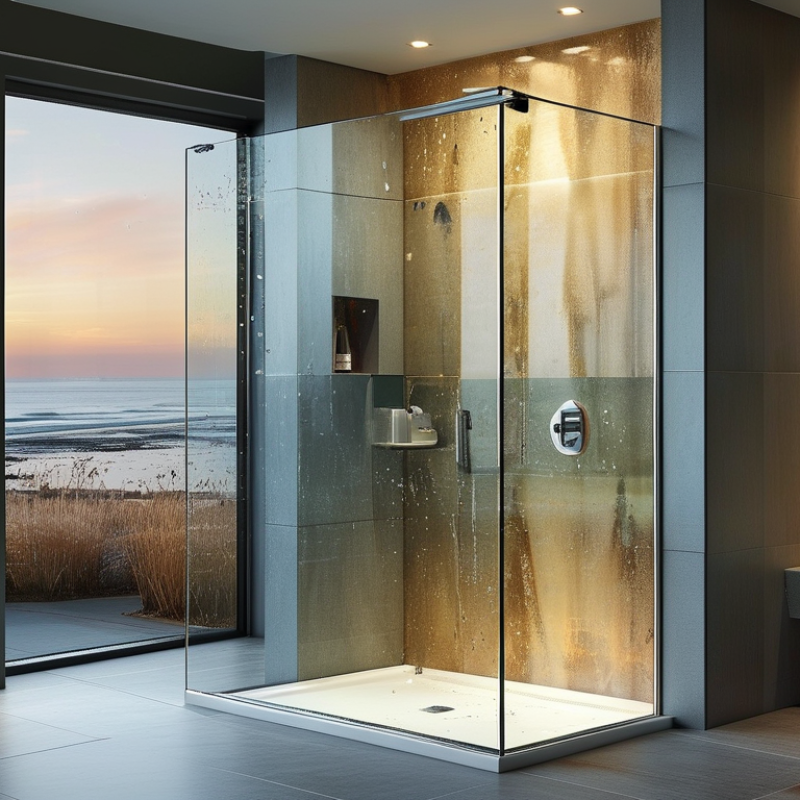
This guide explores top Shower With Glass designs for residential, hospitality, and commercial projects. Frameless enclosures create a clean, open appearance. Semi-frameless models offer added stability and often cost less. Sliding doors can save space, while walk-in panels improve accessibility and simplify cleaning. Yet no style is perfect. Frameless glass may reveal water spots quickly. Large panels can demand careful transport and professional installation. Some buyers focus too heavily on appearance and overlook ventilation or replacement parts.
That mistake can become expensive.
Experienced suppliers should provide technical drawings, glass specifications, installation guidance, and clear after-sales support. Buyers should also confirm local safety requirements before ordering. Visual appeal matters. So does long-term performance. The best choice combines both.
Glass Types: 6–10 mm Tempered Panels Tested to EN 12150 and ANSI Z97.1
For global buyers, a top shower with glass design begins with verified safety, not decoration. Panels from 6 to 10 mm are commonly selected for shower enclosures because they balance rigidity, weight, and hardware compatibility. The National Glass Association’s Glass and Glazing Manual states that fully tempered glass can be approximately four to five times stronger than annealed glass of similar thickness. Still, thicker is not automatically safer.
EN 12150-1 requires thermally toughened glass to meet fragmentation and mechanical performance criteria. ANSI Z97.1 evaluates safety glazing through impact and breakage testing. Ask suppliers for current test reports, batch references, and declared thickness. A proper report should identify the glass type, dimensions, heat-treatment process, and standard edition. Look closely at the edges. Tiny chips near drilled holes can become serious weak points.
Installation quality matters just as much. Industry glazing guidance repeatedly links failures with damaged edges, incorrect setting blocks, excessive hardware pressure, and poor alignment. Rubber gaskets should sit evenly, while metal fittings must not contact bare glass directly. Real bathrooms are less controlled than laboratories. Water, hard-water deposits, and repeated door movement expose small installation defects. I would not treat a passing test report as a complete guarantee. It proves the tested sample met requirements, not that every installation was handled perfectly.
Top Shower With Glass Designs for Global Buyers? - Glass Types: 6–10 mm Tempered Panels Tested to EN 12150 and ANSI Z97.1
| Shower Glass Design | Typical Panel Thickness | Approx. Glass Weight | Light & Privacy | Common Applications | Hardware Considerations | Safety-Glazing Documentation |
| Clear Frameless | 8–10 mm tempered glass | Approximately 20–25 kg/m² | Maximum daylight; lowest privacy | Open corner showers, walk-in enclosures, premium residential bathrooms | Requires accurately aligned hinges, clamps, seals, and suitable wall support | Request heat-soak or tempering records where required, plus conformity evidence to EN 12150 or ANSI Z97.1 |
| Semi-Frameless Clear | 6–8 mm tempered glass | Approximately 15–20 kg/m² | High daylight; moderate visual definition from profiles | Sliding or hinged enclosures where partial framing is preferred | Framing can help accommodate minor wall irregularities; verify channel compatibility | Confirm safety-glazing marking, thickness, edge quality, and applicable standard documentation |
| Fully Framed Clear | 6 mm tempered glass | Approximately 15 kg/m² | Good daylight; frame provides visual structure | High-use bathrooms, retrofit projects, and installations requiring more perimeter support | Frame and seals improve water containment; allow for drainage and adjustment tolerances | Use safety-glazing evidence appropriate to the destination market, including EN 12150 or ANSI Z97.1 where applicable |
| Frosted or Acid-Etched | 6–8 mm tempered glass | Approximately 15–20 kg/m² | Diffused light; improved privacy | Shared bathrooms, hotels, apartments, and privacy-focused walk-in showers | Surface treatment may require careful handling and compatible cleaning products | Tempering applies to the glass substrate; verify that processing and surface treatment do not invalidate required documentation |
| Patterned or Rain-Textured | 6–8 mm tempered glass | Approximately 15–20 kg/m² | Moderated daylight; patterned privacy | Decorative residential bathrooms and hospitality interiors | Check which face is exposed and confirm compatibility with gaskets, rollers, and sealants | Confirm the finished panel has been processed as safety glazing and is supported by the required test or conformity records |
| Tinted or Low-Iron | 8–10 mm tempered glass | Approximately 20–25 kg/m² | Tinted: reduced glare; low-iron: higher visual clarity | Contemporary bathrooms, luxury residences, hotels, and design-led projects | Heavier panels require hardware rated for the complete glass size and door load | Confirm the glass composition, thickness, tempering process, permanent marking, and destination-market compliance |
Technical notes: Approximate glass weight is calculated using a glass density of about 2,500 kg/m³: 6 mm ≈ 15 kg/m², 8 mm ≈ 20 kg/m², and 10 mm ≈ 25 kg/m². EN 12150 covers thermally toughened soda-lime silicate safety glass, while ANSI Z97.1 covers safety glazing materials and their safety performance. Final thickness, dimensions, hardware, testing, marking, and installation requirements should be verified against local building regulations and the project specification.
Frameless Shower Designs: Minimal Hardware with 8–10 mm Safety Glass
For global buyers, frameless shower designs offer a clean, open appearance with minimal visual interruption. Their main feature is 8–10 mm tempered safety glass, which feels stable and reduces movement during daily use. Thicker glass can improve rigidity, but it also adds weight and installation demands. Details matter.
In practice, accurate measurements are essential. Wall angles, floor levels, and door clearances affect every glass panel. Glass edges should be polished, while holes and notches must be prepared before tempering. A qualified installer should verify local building requirements and use corrosion-resistant hinges, seals, and support brackets. Hardware should be limited, not eliminated. The glass still needs secure fixing.
I have seen beautiful frameless enclosures fail visually because the floor slope was ignored. Water collected beside the door, even though the glass was perfectly clear. Good drainage, a flexible seal, and careful alignment prevent this problem. Clear glass also shows soap marks quickly, so daily rinsing helps preserve its appearance. Low-iron glass may improve clarity, but it can increase cost and is not always necessary. Minimalism looks simple, yet it demands better planning and more honest attention to small defects.
Framed Shower Systems: Corrosion-Resistant Aluminum and Standardized Profiles
For global buyers, shower glass design is not only about clear panels and bright finishes. A framed system depends on the aluminum skeleton behind the glass. In humid bathrooms, ordinary metal can stain, pit, or weaken around screw holes. Corrosion-resistant aluminum, supported by suitable anodizing or powder coating, offers a more dependable base. Still, “corrosion-resistant” is not corrosion-proof. Coastal air, harsh cleaners, and trapped water can expose weak points.
Standardized profiles make sourcing and installation more predictable. Repeated channel sizes support consistent glass thickness, seals, rollers, and fasteners across projects. This matters when replacement parts must travel between countries. Experienced installers check wall plumb, floor slope, and opening dimensions before cutting anything. A few millimeters can change door alignment. Poor measurement remains a common failure, even with good materials. It is easy to underestimate.
For a practical design, buyers should inspect coating uniformity, corner finishing, drainage paths, and seal compression. Ask for material specifications, salt-spray data, and sample profile sections. These documents help, but they do not replace physical inspection. Look closely at joints. Water often gathers there. Tempered glass, stable hinges, and accurately finished edges also affect daily safety and service life. Some elegant frames use narrow profiles, yet wider sections may provide better rigidity for large panels. The best choice depends on size, climate, cleaning habits, and local installation skills.
Top Shower With Glass Designs for Global Buyers? — Framed Shower Systems: Corrosion-Resistant Aluminum and Standardized Profiles
Common framed shower specifications typically pair 6–10 mm tempered safety glass with aluminum profiles around 1.2–2.0 mm wall thickness. Standardized profile options can simplify replacement, installation, and cross-market purchasing. Final specifications should be verified against local building codes and system engineering requirements.
Global Buyer Checklist: Water Ratings, Certification, Door Clearance, and Installation Data
Top Shower With Glass Designs for Global Buyers?
A glass shower is not only a visual purchase. Water pressure, flow rate, and drainage determine daily performance. The U.S. EPA WaterSense specification limits certified showerheads to 2.0 gallons per minute, or 7.6 liters, compared with the common 2.5-gallon federal limit. Buyers should request tested flow data at several pressures, not one attractive number. The WHO/UNICEF Joint Monitoring Programme reported that 2.2 billion people lacked safely managed drinking water in 2022. Local water quality and supply conditions therefore deserve attention. A neat checklist is not enough.
Ask for certification documents matching the destination market. Shower enclosures may require safety-glass evidence under standards such as EN 14428, ANSI Z97.1, or equivalent local rules. Confirm glass thickness, impact testing, hardware corrosion resistance, and traceable test dates. Door clearance must include handles, seals, and the full swing path. Request a dimensioned installation drawing showing wall tolerance, waterproofing zones, drain position, minimum ceiling height, and required service access. On real sites, elegant designs sometimes fail because the door meets a towel rail.
Tips: Measure the finished opening, not the rough opening. Record static and working pressure. Check whether the floor is level. Leave adjustment tolerance for imperfect walls; they are common. Ask for installation photos from similar projects, but treat them as evidence, not certification.
 Skip to content


 English
 Russian
  German
  Spanish
  French
  Portuguese