SUNDI TOOLS
- Copyright © Wuxi Sundi Precision Tools Co.,LTD All rights reserved.
- Site Map
Micro Sprinkler Irrigation is increasingly relevant to growers seeking controlled water delivery across orchards, nurseries, and protected crops. The case is practical: a well-positioned micro-sprinkler can wet a defined root zone while leaving nearby paths comparatively dry. But performance depends on nozzle selection, pressure, filtration, spacing, and maintenance—not product claims alone.
The UN-Water 2021 Summary Progress Update reports that agriculture accounts for about 72% of global freshwater withdrawals. This figure describes agriculture broadly, not micro-sprinkler use specifically. Still, it explains why buyers examine water efficiency and uniformity closely. Irrigation engineer Dr. Michael D. Dukes of the University of Florida has studied irrigation management and system performance. In paraphrase, his work points to a basic principle: irrigation should be matched to crop needs and field conditions. A useful reminder. This is not a direct quotation, and supplier claims should be checked against technical specifications and field evidence.
For buyers comparing China-based suppliers, the details matter. Ask for flow-rate and pressure ranges, filtration guidance, nozzle options, material specifications, and test documentation. Request samples where possible; a catalog image cannot reveal spray pattern consistency or clogging behavior. Check whether the supplier supports replacement parts and clear installation instructions. One limitation remains: published specifications may not reflect performance under local water quality or operating conditions. The following overview examines leading supplier options through product range, manufacturing capability, export experience, and evidence buyers can verify. The comparison is useful, but no supplier is right for every farm.
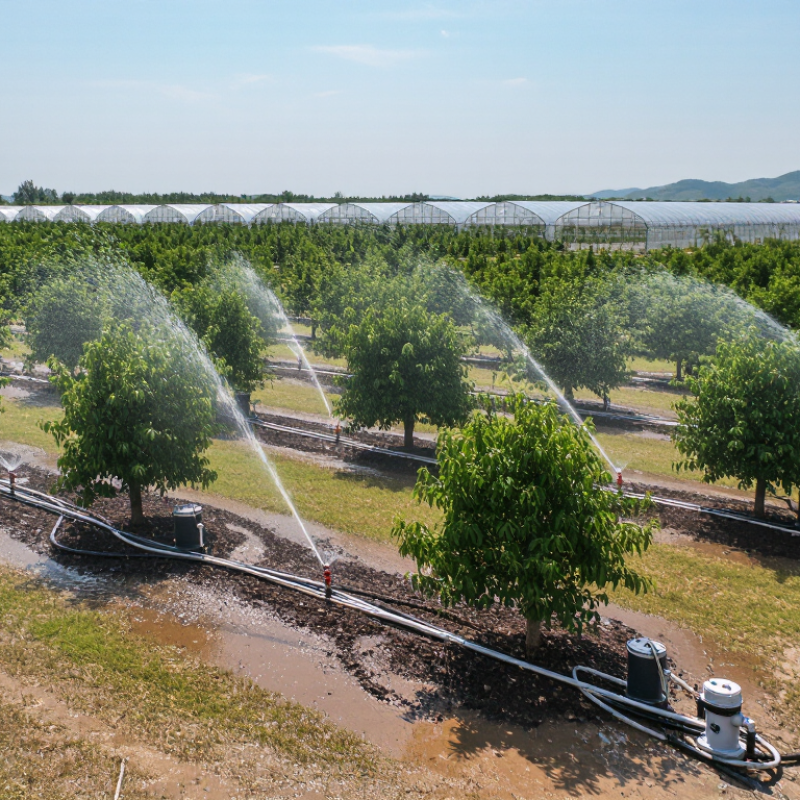
Micro sprinkler irrigation is a form of microirrigation that applies water through small emitters, usually at low pressure, over a limited area. Unlike drip systems, which wet soil near individual outlets, micro sprinklers create a fine spray or small rotating pattern. A grower can see the wetting zone around young trees, vegetable beds, or nursery plants. That visible pattern helps with checks, but wind can shift it.
The USDA Natural Resources Conservation Service describes microirrigation as applying small amounts of water frequently through emitters. In practice, filters, pressure control, and emitter spacing matter: a clogged nozzle can leave a dry patch while nearby plants look healthy. The FAO’s 2017 report Water for Sustainable Food and Agriculture notes that agriculture accounts for about 70% of global freshwater withdrawals. This is a broad sector figure, not a claim that any one irrigation method saves a fixed amount.
Micro sprinklers can suit shallow-rooted crops or young orchards where broader surface wetting is useful. Yet performance depends on soil, crop layout, water quality, and local weather. The label “water-efficient” alone tells too little; measuring flow and checking soil moisture are better tests. Even a neat spray pattern can hide uneven root-zone coverage.
A micro sprinkler system carries water through a filter and a network of narrow pipes. Small emitters release fine sprays or rotating streams above the soil. The pump supplies pressure, while valves and pressure regulators help keep flow steady across irrigation zones. Small parts matter. A partly blocked nozzle can leave a dry patch beside visibly wet plants.
Emitter spacing and spray radius should match the crop, soil, and local conditions. Sandy soil absorbs water quickly, so shorter, more frequent runs may reduce runoff. Clay soil needs slower application to avoid puddles. Wind can push droplets away from their intended area, and hot weather increases evaporation. Check the soil, not just the spray pattern. The surface may look moist while deeper roots remain dry.
Before installation, compare supplier specifications for operating pressure, flow rate, filtration needs, and replacement nozzles. These details are more useful than a broad coverage claim. Flush the lines and inspect filters regularly; even clean water can carry particles that clog small openings. A system can be efficient, but it is not automatically uniform. Measure output from several emitters with cups, then adjust spacing or pressure where results differ. That extra check takes time, and it can reveal problems a quick visual inspection misses.
Micro sprinklers are used in orchards, nurseries, vegetable plots, and landscaped spaces where gentle, localized watering is useful. In an orchard, a small sprinkler can wet the soil around young trees without soaking the entire row. Growers may adjust placement as roots spread. It is not a set-and-forget choice.
Nurseries often use micro sprinklers to maintain more even moisture across grouped containers or seedling beds. For vegetables, they can serve narrow beds and reduce water reaching paths, though leaf wetness and crop needs deserve attention. In gardens, parks, and planted roadside areas, low-flow sprays can water shrubs and groundcover while keeping paths drier. That matters.
Performance depends on practical details. Check the water source, filter, operating pressure, spacing, and local wind conditions before choosing a layout. Fine droplets can drift, and clogged nozzles may leave dry patches that are easy to miss at first. Soil type also changes how quickly water moves away from each sprinkler. A short field test can reveal uneven coverage, but one test may not represent every season. Even a tidy design can need revision. That is part of using the system well.
When evaluating micro sprinkler suppliers in China, start with verified performance data, not catalogue claims. FAO AQUASTAT estimates that agriculture accounts for about 70% of global freshwater withdrawals, making efficient irrigation design important. But a product’s water-saving potential depends on field layout, pressure, filtration, and maintenance—not the nozzle alone. Ask suppliers for flow-rate and pressure test results, spray-radius measurements, and the conditions used during testing. Compare samples at the same pressure; even small differences can create dry strips between rows.
Check whether the supplier can explain filtration needs, nozzle cleaning, UV resistance, and material specifications in practical terms. Request production records and repeat test results from different batches. A short factory video is useful, but it cannot replace documented quality checks. The World Bank’s work on water in agriculture also emphasizes the value of better water management; this supports asking suppliers how their equipment performs within a complete irrigation system. If possible, test a sample on-site with a pressure gauge and catch cups to compare water distribution. Look for stable coverage, not just a wide spray. Some suppliers may provide polished reports yet offer little detail on test methods. That is a warning worth taking seriously.
Use this vendor-neutral scorecard to compare suppliers. The performance figures and requirements should be agreed for the specific crop, system design, and product model; they are not claims about any individual supplier.
| Evaluation criterion | Weight | What to verify | Evidence of a strong supplier | Score (0–5) |
|---|---|---|---|---|
| Product performance | 25% | Check flow rate, operating-pressure range, wetted diameter, droplet pattern, and distribution uniformity for the proposed nozzle and model. | Provides model-specific performance curves and test results, with test pressure, setup, and conditions clearly stated. | ___ / 5 |
| Product quality and consistency | 20% | Review material specifications, dimensional tolerances, assembly checks, batch traceability, and inspection procedures. | Shares documented inspection records and a clear process for handling nonconforming products and corrective actions. | ___ / 5 |
| Manufacturing capability | 15% | Confirm which processes are performed in-house, production capacity, equipment, production scheduling, and inspection checkpoints. | Can explain the production flow, provide current facility or process evidence, and support a production audit or sample inspection. | ___ / 5 |
| Customization and system compatibility | 10% | Assess available connection types, nozzle options, mounting arrangements, filtration requirements, and compatibility with the buyer’s irrigation layout. | Supplies drawings and samples, identifies design limits, and confirms any changes to tooling, cost, and delivery schedule in writing. | ___ / 5 |
| Export readiness and documentation | 10% | Review product specifications, packing details, commercial documents, shipping terms, and any destination-market requirements relevant to the order. | Provides consistent documentation and confirms responsibilities, shipment milestones, and packaging details before order placement. | ___ / 5 |
| Commercial terms and total cost | 10% | Compare quotations on the same product specification, order quantity, packaging, payment terms, and agreed delivery term. | Clearly itemizes pricing, minimum order quantity, sample charges, tooling costs (if any), and quote validity. | ___ / 5 |
| Communication and after-sales support | 10% | Assess response clarity, technical support, warranty terms, spare-parts availability, and the process for resolving product issues. | Answers technical questions consistently and documents support contacts, warranty coverage, and claim-handling steps. | ___ / 5 |
| Total weighted score | 100% | Weighted points = criterion weight × score ÷ 5. Add the points from all criteria for a maximum of 100. | ___ / 100 | |
Scoring guide: 0 = no evidence; 1 = weak; 2 = below requirements; 3 = meets requirements; 4 = exceeds requirements; 5 = strong, well-documented evidence. Verify claims with product samples, records, and written quotations before making a purchasing decision.
Top Micro Sprinkler Irrigation Suppliers in China?
Evaluate suppliers by how well their products fit your crop, water source, and field layout. Ask for nozzle flow rates, operating pressure ranges, wetted diameter, and filtration requirements. These details help match sprinklers to crop spacing, soil texture, and pump capacity. Request a product datasheet and sample, then check spray uniformity at your intended pressure. Small details count.
A dependable supplier should explain material options, spare-part availability, and product tolerances in clear terms. Ask how flow rates are checked and whether test conditions are documented. For a practical review, place sample sprinklers over a marked grid and compare water collection at several points. Uneven coverage can signal pressure problems, clogged nozzles, or unsuitable spacing. A catalog alone cannot reveal every field issue, and water quality may change performance more than expected.
Tips: Confirm filtration needs before ordering. Keep one sample for testing, and record pressure and flow during trials. Compare answers carefully; a polished response is helpful, but verifiable details matter more.