What Are the Top Organic Vegan Gelatin Alternatives?
Gelatin gives panna cotta its delicate wobble and helps fruit desserts hold a clean slice, but conventional gelatin comes from animal collagen. For cooks seeking plant-based options, the best substitute depends on the recipe, not just the label. Agar-agar can create a firm set in puddings and jellies, while pectin is often useful in fruit-rich mixtures. Carrageenan and konjac may suit particular textures, though their performance can vary with the recipe and product.
Organic Gelatin Vegan is a useful search phrase, but it does not guarantee that every ingredient in a product is certified organic or suitable for every diet. Check packaging for ingredient details and relevant certification, and look for clear vegan labeling. Texture matters. Some alternatives set more firmly than gelatin; others need specific heating or proportions. A spoonful of agar in a saucepan, for example, may behave differently from a packet of pectin stirred into berries. Small tests help, especially when adapting a family recipe.
This guide compares popular organic vegan gelatin alternatives by source, texture, and practical use. It also notes where substitutions can disappoint: a glossy jelly may turn brittle, or a creamy dessert may set too firmly. There is no perfect swap for every dish. Readers can use the comparison to choose a starting point, then adjust carefully and record what worked. Even a trusted recipe may need a little rethinking.
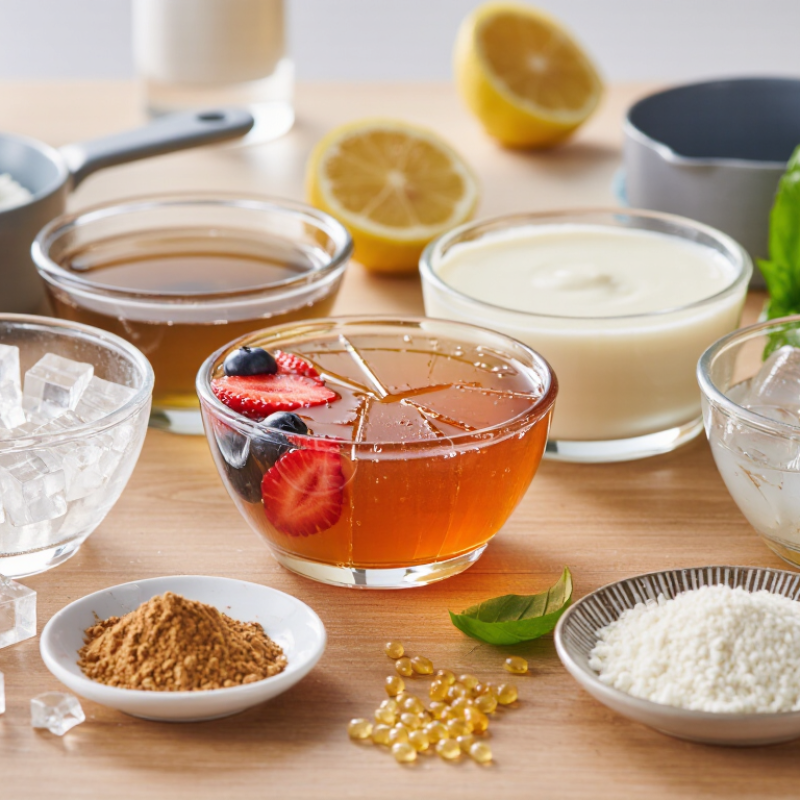
Understanding Vegan Gelatin and Organic Certification
Gelatin is made from collagen, usually sourced from animal tissue. Vegan alternatives set foods through plant-based or microbial ingredients instead. Agar forms a firm gel from seaweed; pectin gives fruit preserves their familiar softness. They behave differently. A dessert made with agar may set quickly and feel less elastic than one made with gelatin.
Organic certification answers a different question. It concerns how qualifying ingredients are grown and processed under a particular certification system; it does not automatically mean a product is vegan. Nor does “vegan” guarantee that every ingredient is organic. Check the ingredient list for the gelling agent, then look for a recognized organic certifier and confirm what the claim covers. Rules and permitted processing aids can vary by market. Labels can be confusing. A product may contain organic sugar but a non-organic gelling ingredient, so the front label may not tell the whole story. For a recipe, test a small batch: acidity, sugar, and heating time can all change how a plant-based gel sets. I would not assume that an organic alternative works like gelatin; that assumption is easy to make, and often disappointing.
Key Plant-Based Gelling Agents and Their Sources
Agar and carrageenan come from red seaweeds, but they behave differently in the pan. Agar, commonly extracted from Gelidium and Gracilaria, sets firmly and can remain stable at room temperature. Carrageenan, sourced from seaweeds such as Kappaphycus, is useful for softer, creamy textures. The seaweed source matters. FAO’s The State of World Fisheries and Aquaculture 2024 reports 37.8 million tonnes of global algae production in 2022, supplied almost entirely by aquaculture. That scale does not make every seaweed ingredient identical; species, processing, and grade affect performance. For a small test, agar can turn a fruit glaze brittle if the dose is too high. Texture matters.
Pectin is usually recovered from citrus peel or apple pomace, familiar by-products of juice processing. It works especially well in acidic fruit mixtures, though sugar and acidity levels influence the set. Konjac glucomannan comes from the konjac corm and thickens liquids; on its own, it may not create the clean slice expected from gelatin. Gellan gum is produced by microbial fermentation, so its origin is not a plant itself, even though it can suit vegan recipes. I would not treat “plant-based” as proof of organic status. Organic eligibility depends on the applicable certification rules and processing aids, so check supplier documentation. It is an easy detail to overlook.
Comparing Agar, Pectin, Carrageenan, and Other Alternatives
Agar-agar, extracted from red algae, sets firmly and holds its shape at room temperature. It must be brought to a boil to activate, then poured before it cools. The result can be clean-cut and slightly brittle, rather than softly wobbly. Texture matters. Agar works well in fruit jellies and molded desserts, but a delicate panna cotta may feel too firm.
Pectin is a fruit-derived fiber often used in jams and fruit gels. Its setting behavior depends on the type: many high-methoxyl pectins need sugar and acid, while low-methoxyl versions generally use calcium. Carrageenan also comes from seaweed. Kappa types form firmer gels, iota types tend to be more elastic, and lambda mainly thickens rather than setting. Not quite interchangeable. Starches can thicken puddings, though they may turn cloudy or pasty; konjac can make a springy gel, especially in blends. No single option mimics gelatin in every recipe. Ratios rarely transfer neatly, so test a small batch and adjust. “Organic” availability varies by ingredient and supplier; check the product’s certification and ingredient details instead of assuming a plant-based label guarantees it.
How Each Alternative Performs in Cooking and Baking
Agar-agar is a strong choice for set desserts, fruit jellies, and sliceable vegan panna cotta. It needs to simmer briefly to dissolve, then firms as it cools, often at room temperature. The texture is usually firmer and less elastic than animal gelatin. Too much can make a dessert snap rather than wobble. Measure carefully.
Pectin performs best in fruit-based fillings, jams, and tart glazes. Its setting depends on the type used and the balance of sugar and acid, so a low-sugar recipe may need a different formula. Carrageenan can create smoother, softer gels in puddings and creamy desserts, but it disperses unevenly if stirred into cold liquid without care. For cakes and muffins, tapioca starch can add moisture and chew, though it will not produce a clean, freestanding gel. It works as a supporting ingredient, not a direct gelatin substitute. Small batches help. Organic certification depends on the ingredient and its source; check the package rather than assuming every plant-based gelling agent is organic. I still find agar desserts easy to over-set, especially when replacing gelatin by volume instead of following a tested recipe.
Choosing an Organic Vegan Gelatin Substitute for Your Recipe
Choosing an organic vegan gelatin substitute starts with the texture your recipe needs. Gelatin makes elastic, heat-sensitive gels; agar usually sets firmer and can become brittle when overused. For chilled fruit jelly, measure agar carefully, boil it briefly to activate, and pour promptly. It sets at room temperature. Not interchangeable.
For preserves, pectin often works well when fruit provides enough acidity and sugar. Match the pectin type; low-sugar recipes behave differently. Carrageenan can make softer, dairy-style gels, though results vary by type and calcium level. Check for organic certification and review the ingredient source and additives: “plant-based” does not automatically mean organic. FAO’s The State of World Fisheries and Aquaculture 2024 reports 37.8 million tonnes of algae production in 2022, mostly cultivated. That offers useful supply context for agar and carrageenan, but does not prove every product is organic. Test a small batch. Fruit acidity, minerals, and cooling speed can all affect the set, and a perfect one-for-one swap is rare.
Top Organic Vegan Gelatin Alternatives: Setting and Melting Temperatures
Approximate temperature ranges (°C) for two widely used plant-based gelling agents.
Agar forms a heat-stable gel that sets as it cools and typically melts at a much higher temperature than kappa carrageenan. Carrageenan’s performance depends on the type used and the salts in the recipe. Pectin and konjac are also vegan options, but their setting behavior varies substantially with recipe conditions. Organic status depends on the ingredient’s certification; these ranges are approximate and can vary by formulation.
 Skip to content



 English
 Russian
 German
 Spanish
 French
 Portuguese