Ultimate Guide to Router Blade Tips for Peak Performance?
In woodworking, achieving peak performance hinges on the right tools. One crucial tool is the router blade. This essential component shapes edges and creates joints. However, many users overlook its significance. The right router blade can elevate your project’s quality.
Choosing a router blade wisely is important. Different blades serve different purposes. From straight cutting to profile edges, knowing your options is key. A blunt blade can ruin your efforts. Regular maintenance can extend its lifespan.
Many beginners underestimate the impact of a high-quality router blade. Investing in quality pays off in the long run. Reflect on this: how often do you replace your blades? With proper care, your router blade can be a reliable ally in your woodworking journey.
Understanding Router Blade Types and Their Applications
Router blades come in various types, each designed for specific tasks. Understanding these types is crucial for maximizing efficiency and performance. For instance, straight router bits are commonly used for edge trimming and creating grooves. Their simple design allows for clean cuts in materials like wood and MDF.
In contrast, spiral router bits are increasingly popular for their ability to minimize chipping. A recent study revealed that spiral bits can reduce chipping by up to 30% compared to traditional straight bits. However, some users may find these bits more challenging to control, especially on harder materials. This inconsistency can lead to unexpected results, requiring extra attention during use.
Lastly, specialty router bits serve niche applications. These include dovetail, mortising, and cove bits, which allow woodworkers to create intricate joinery and decorative profiles. Reports indicate that improper use of specialty bits can result in wasted materials, as 25% of users experience issues due to lack of familiarity with the tools. Understanding the correct application is essential to avoid costly mistakes.
Best Practices for Maintaining and Sharpening Router Blades
Maintaining and sharpening router blades is essential for optimal performance. Dull blades can lead to rough cuts and potential damage to your workpieces. Regular maintenance can prevent this. Start by cleaning the blades after each use. Resin buildup can affect their effectiveness.
Inspect your router blades frequently. Look for nicks or dull edges. If they are showing wear, it's time to sharpen them. You can use a sharpening stone or a professional sharpening service. Each method has its pros and cons. Sharpening at home requires practice and patience. You may not get it right the first time.
Storage matters too. Keep blades in a dry place to avoid rust. Consider using blade guards or protective cases. These simple practices can extend the lifespan of your blades. Over time, you may notice improvements in your cutting quality. Remember, a little care goes a long way.
Ultimate Guide to Router Blade Tips for Peak Performance
| Tip Category |
Tip Description |
Frequency |
Sharpening Method |
| General Maintenance |
Clean blades after each use to remove resin and dust. |
After Every Use |
Use a soft brush or cloth. |
| Sharpening Frequency |
Inspect blades regularly for dullness and sharpen as needed. |
Every 10-15 Uses |
Use a sharpening stone or professional service. |
| Storage |
Store router blades in a protective case to avoid damage. |
Always |
N/A |
| Cutting Technique |
Feed wood steadily to avoid overworking the blade. |
Always |
N/A |
| Blade Inspection |
Check for chips or cracks before use. |
Before Every Use |
N/A |
Techniques for Achieving Peak Performance with Router Blades
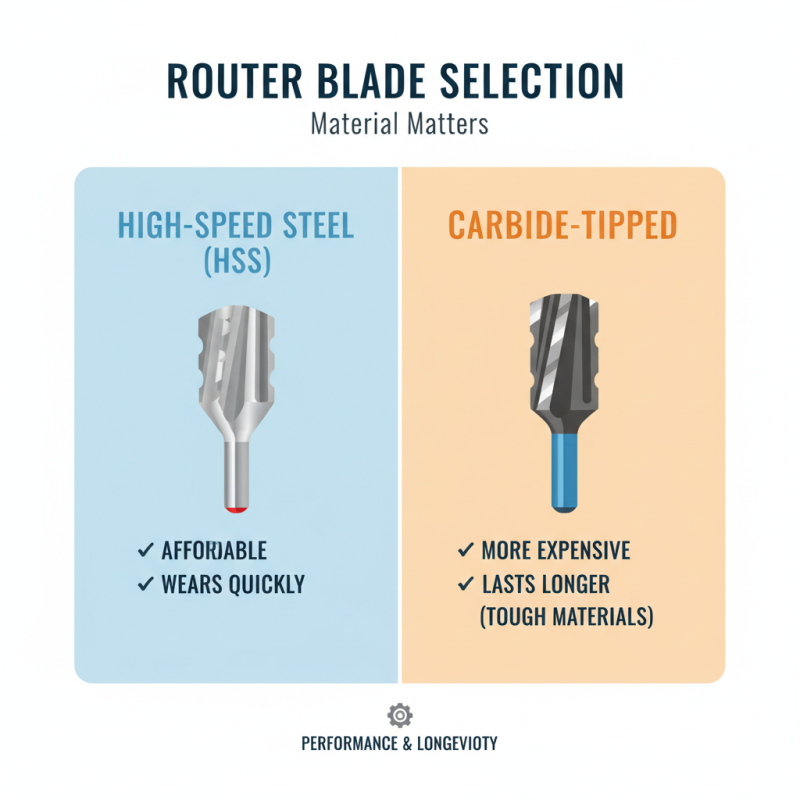
When working with router blades, achieving peak performance is essential. One technique involves selecting the right blade for your material. Different woods require specific types of blades. For instance, softer woods may perform best with fewer teeth in the blade, while harder woods often need more teeth for clean cuts. Experimenting with various options can lead to better results.
Another important aspect is maintenance. Regularly checking and sharpening your blades can enhance their efficiency. A dull blade can lead to splintering and uneven edges. Cleaning the blades after use is equally crucial. Resin buildup can affect performance significantly. Sometimes, these simple steps are forgotten but can make a noticeable difference.
Many users overlook the feed rate when operating a router. If you go too fast, the cut may be rough. If you go too slow, it can cause burn marks. Finding the right speed often requires practice and adjustment. It’s normal to make mistakes along the way. Reflecting on these experiences can improve your technique in the long run.
Safety Tips for Using Router Blades Effectively in Woodworking
When working with router blades, safety is paramount. A report from the Woodworkers Guild states that over 30% of injuries in woodworking are blade-related. Proper use of router blades can significantly reduce these risks.
Always wear safety goggles. Wood chips can fly unexpectedly, causing eye injuries. A well-fitting dust mask is also critical. This helps to avoid inhaling sawdust, which can lead to long-term respiratory issues. Ensure you’ve reviewed your router's manual. Understanding the specific safety features can prevent mishaps.
Blade setup is equally important. Check blades for sharpness and alignment before use. Dull blades can cause kickback, which might lead to serious injuries. This is often overlooked. Regular maintenance keeps blades operating safely. Inspect wiring and connections too. A frayed cable can lead to electric shock.
Remember, patience is key. Rushing through a project increases the likelihood of mistakes. Each step should be taken with care. Use push sticks for added control when routing small pieces. Always be mindful of your workspace. Clutter can lead to accidents. By following these safety tips, you dramatically enhance your woodworking experience.
 Skip to content







 English
 Russian
  German
  Spanish
  French
  Portuguese