SUNDI TOOLS
- Copyright © Wuxi Sundi Precision Tools Co.,LTD All rights reserved.
- Site Map
An Automatic Price Labelling Machine applies printed price labels to products with speed, consistency, and controlled accuracy. It may combine a printer, product sensor, conveyor, applicator, and verification system. In a busy supermarket, the machine can label trays, jars, cartons, or packages as they pass beneath a print head. The process looks simple. It is not always simple.
Mike Fairley, a respected label-industry consultant and author, offers a useful principle: “Reliable labeling begins with accurate data, not faster machinery.” That idea shapes this guide. A machine cannot correct a wrong price, unclear product code, or poorly maintained database. It only reproduces the information it receives. Operators must therefore check label dimensions, print contrast, adhesive performance, and product spacing before production begins.
The right Automatic Price Labelling Machine can reduce repetitive labor and support consistent retail presentation. Some systems adjust label positions automatically. Others connect with weighing equipment, inventory software, or barcode verification tools. These features can improve traceability and reduce manual mistakes. Still, automation is not a guarantee of perfection.
Small failures matter. A skewed label can hide a barcode. A weak adhesive can detach in a chilled display. Incorrect settings can waste rolls and slow the line. Regular cleaning, calibration, and sample checks remain essential. This article explains how the equipment works, where it fits, and what buyers should examine before choosing a system.
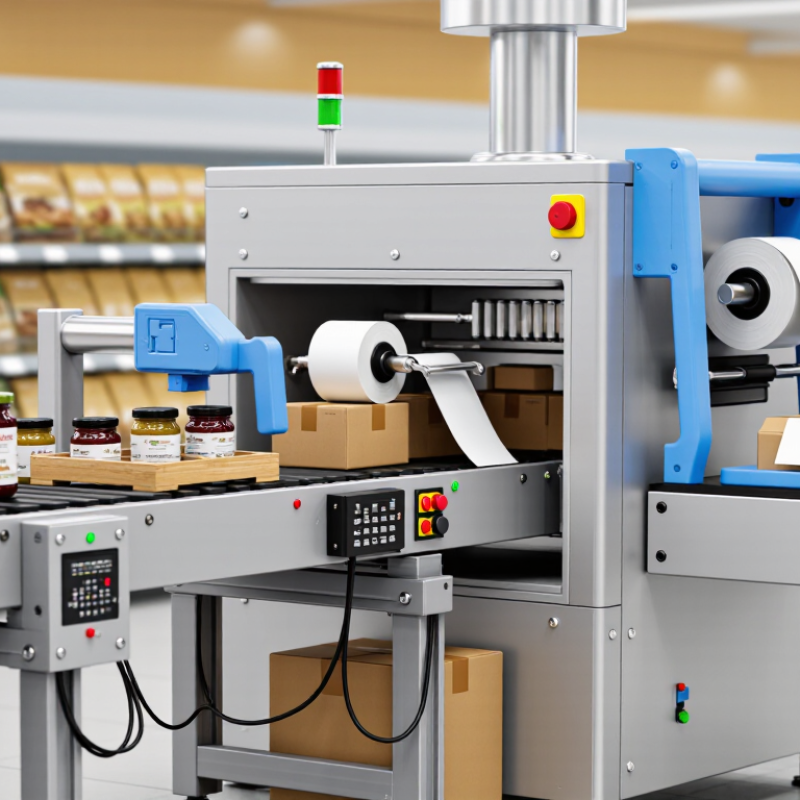
An automatic price labelling machine is equipment that prints and applies price labels to products with limited manual handling. Its core function is simple: match product information with the correct label, then place it accurately on the package. A typical label may show the product name, selling price, unit price, barcode, weight, or packing date.
The machine usually combines a product sensor, data controller, printer, and labelling applicator. When a package reaches the labelling area, the sensor detects its position. The controller retrieves the related information from a connected product database. The printer produces the label, while the applicator presses it onto a fixed surface. Speed matters here. In a busy packing line, this process can reduce repetitive work and keep label positions more consistent.
Reliable operation still depends on careful setup. Staff should check product codes, label dimensions, print clarity, and sensor sensitivity before production begins. A wrong database entry can create many incorrect labels quickly. Small errors spread. Package shapes also differ, so one placement setting may not suit every product. In real production, alignment is not perfect, especially with curved or wet surfaces. Regular cleaning and sample checks help, but they do not replace operator judgment. That practical limitation is easy to underestimate.
An automatic price labelling machine applies printed price labels to products with consistent speed and placement. It is often used for packaged food, household goods, and retail-ready items. The main components include a conveyor, product sensors, label roll holder, printer, applicator, controller, and touch-screen interface. Each part affects the final result.
The conveyor moves each product through a controlled labelling point. A sensor detects its position and sends a signal to the controller. The printer then produces the required label, including price, weight, date, or barcode data.
An applicator places the label using a tamp pad, roller, or air blast. Timing matters. A delay of only a fraction of a second can move the label several millimetres.
In practical operation, technicians adjust conveyor speed, sensor distance, label tension, and print darkness. They also check barcode readability and adhesive contact during production. A verification sensor can reject products with missing or poorly positioned labels. However, no machine removes every risk. Dust, uneven packages, and changing product sizes can cause errors. I have found that regular cleaning and small calibration checks prevent more problems than dramatic repairs. The process looks simple, but accurate labelling depends on careful setup, stable materials, and continuous observation.
An automatic price labelling machine prints and applies changing price labels with controlled accuracy. Its value depends on the product, surface, and store rhythm.
In fresh-food departments, it handles trays, cartons, film-wrapped produce, and bakery packs. A thermal printer can add price, weight, date, allergen, or batch details. Short labels fit narrow shelves. Large labels suit cartons and promotional displays.
It also supports apparel, cosmetics, household goods, hardware, and packaged groceries. Adhesive labels work on boxes, glass, plastic, and hangtags, although oily or cold surfaces remain difficult.
In supermarkets, scales and point-of-sale systems can trigger updates. In pharmacies, controlled workflows help reduce manual transcription, but staff verification still matters. Convenience stores need compact equipment. Distribution centers need faster print-and-apply units.
Retail data explains the pressure.
The National Retail Federation’s 2023 Retail Returns Report estimated U.S. retail returns at 14.5% of annual sales. Clear prices and product identifiers can reduce avoidable checkout disputes, although labels cannot solve every return problem.
McKinsey’s State of Grocery 2024 reported grocery margins near 2%, making small labor savings meaningful. My practical concern is less glamorous: adhesive failures, poor calibration, and rushed replenishment can erase those gains.
A machine may be automatic, but the process is not. Temperature checks and periodic audits remain essential.
What Is an Automatic Price Labelling Machine?
An automatic price labelling machine prints and applies price labels with limited manual handling. It can connect with inventory or point-of-sale data, depending on the workplace setup. A product moves along a conveyor, pauses briefly, and receives a label in a fixed position. The label may show the price, barcode, product code, batch detail, or date.
Accuracy is the main operational benefit. The machine reduces handwriting errors, misplaced labels, and inconsistent pricing formats. When a price changes, staff can update the digital record and print a new label quickly. This helps keep shelf prices, promotional displays, and checkout information aligned. Clear barcodes also support faster scanning and fewer manual corrections.
It is not magic. Incorrect product data still creates incorrect labels. Regular checks remain necessary, especially after a price update or roll change. In daily use, operators should inspect label position, print quality, and barcode readability. A simple sample check every hour can reveal fading ink or shifted application. The machine also saves labor during busy periods, allowing staff to focus on replenishment and customer service. However, poorly planned workflows may reduce these gains. Experience shows that training, maintenance, and clean data matter as much as the equipment itself. Reliable results come from combining automation with responsible human oversight.
A practical comparison of manual and automated price-label application processes
| Evaluation Dimension | Manual Price Labelling | Automatic Price Labelling Machine | Operational Benefit |
|---|---|---|---|
| Price Data Entry | Operators read or enter prices manually. | Prices can be transferred from a scale, product database, POS system, ERP system, or production line controller. | Reduces keying errors and supports consistent price application. |
| Label Placement | Placement depends on operator alignment and handling technique. | An applicator positions labels according to programmed product and packaging settings. | Improves placement consistency and product presentation. |
| Price Accuracy | Accuracy depends on correct data selection, printing, and visual inspection. | The machine can use controlled data sources and programmed label templates. | Helps prevent incorrect prices, outdated promotions, and mismatched labels. |
| Variable Information | Weight, date, batch, and price information may require separate manual steps. | Variable fields can be generated from product, weighing, timing, and production data. | Supports accurate labelling of weight-based and time-sensitive products. |
| Throughput | Output is limited by operator speed, product handling, and inspection time. | Output is determined by the machine configuration, label size, product spacing, and line speed. | Provides a more predictable production rhythm for repetitive work. |
| Changeover Control | Operators may need to replace materials and adjust settings manually. | Stored recipes or product profiles can define label content and application settings. | Makes product changeovers more repeatable and easier to manage. |
| Barcode and Data Quality | Print quality and barcode readability depend heavily on manual checks. | The system can print standardized barcode formats and may support scanner-based verification. | Improves scan reliability and supports inventory and checkout processes. |
| Traceability | Records may be completed separately or manually. | Production data, label records, and error events can be logged when system integration is available. | Supports audits, recalls, quality investigations, and process monitoring. |
| Labour Requirements | Requires continuous operator involvement for labelling and checking. | Operators mainly load materials, monitor the process, perform checks, and respond to alarms. | Allows staff to focus on quality control, replenishment, and higher-value tasks. |
| Error Detection | Incorrect labels may be found during visual checks or downstream operations. | Sensors and optional scanners can detect missing, misplaced, or unreadable labels. | Enables earlier intervention and lowers the risk of defective products reaching customers. |
| Material Usage | Higher risk of misprints, duplicate labels, or incorrect label rolls during manual handling. | Controlled printing and application can reduce unnecessary rework and label waste. | Improves material control and supports more predictable operating costs. |
| Best-Fit Applications | Low-volume production, infrequent labelling, prototypes, or highly variable products. | Repetitive production, retail packaging, food processing, logistics, warehousing, and other high-volume workflows. | Helps match the labelling method to volume, consistency, and integration requirements. |
Choosing an automatic price labelling machine means matching real production conditions, not chasing the highest advertised speed. Start with the product range. Record package dimensions, surface materials, weight variation, and daily label volume. Short runs change the decision. A machine handling 120 packs per minute may underperform when frequent changeovers create ten-minute setup delays. For weighed goods, verify scale accuracy, label placement, and software compatibility. The system should support variable prices, dates, barcodes, and promotional messages without repeated manual entry. Print quality matters. ISO/IEC 15416 provides objective barcode grading from A to F, helping buyers compare verification results.
Integration deserves equal attention. Deloitte’s 2023 Global Smart Manufacturing Survey found that 92% of manufacturers expect smart manufacturing to improve competitiveness within three years. A labeller should exchange data with scales, production software, and inspection equipment. The 2024 PMMI State of the Industry report also identifies labor availability and operating efficiency as continuing automation pressures. Ask suppliers for measured uptime, changeover time, reject rates, and service response data. Marketing claims are not enough.
Calculate total cost, including ribbons, labels, cleaning, training, maintenance, and downtime. During a factory acceptance test, use the smallest package, fastest line speed, and most difficult label stock. That test is revealing. An uncomfortable question remains: can operators adjust the machine safely during a rushed shift? Do not ignore washdown requirements or access for cleaning. Under-sizing creates bottlenecks. Over-sizing can waste capital and floor space. A carefully documented trial usually exposes both problems.
Factors to Consider When Selecting a Suitable Machine
An automatic price labelling machine applies printed price or product labels to items with limited manual handling. The priority weights shown in this practical evaluation model emphasize label accuracy, compatibility, throughput, integration, changeover efficiency, and operator safety when comparing suitable equipment.