...

Why Choose Pallet Rack for Your Warehouse?

A warehouse can look orderly from the aisle and still waste valuable space above it. Pallet Rack turns that unused vertical room into accessible storage, helping teams organize inventory, separate product types, and keep picking routes clear. The right system can also adapt as stock levels change. The wrong one can create congestion, awkward handling, or costly damage. Details matter.

The investment context is changing. MHI and Deloitte’s 2024 Annual Industry Report found that 88% of supply chain professionals expected to increase technology investment over the next five years. That figure covers supply chain technology broadly, not pallet rack alone. Still, it reflects pressure on warehouses to make space and operations work harder. Selective rack, for example, offers direct access to each pallet; higher-density layouts may store more, but can limit access. There is no universal winner.

Safety belongs in the decision from day one. OSHA’s material-handling rule states, “Storage of material shall not create a hazard.” Rack capacity, floor conditions, load dimensions, and equipment clearances all deserve careful review. A visibly straight upright is not proof that a rack is undamaged. Small impacts can be easy to miss.

A useful design starts on the warehouse floor: measure the aisles, note the forklift turning radius, and check the tallest planned load. Then compare those needs with growth plans and inspection routines. Pallet Rack is infrastructure, not just shelving. The tempting shortcut is to maximize capacity immediately; that choice may make daily access harder. Thoughtful planning pays attention to both.
Why Choose Pallet Rack for Your Warehouse?

What Pallet Rack Is and How It Works

Why Choose Pallet Rack for Your Warehouse?
What Pallet Rack Is and How It Works

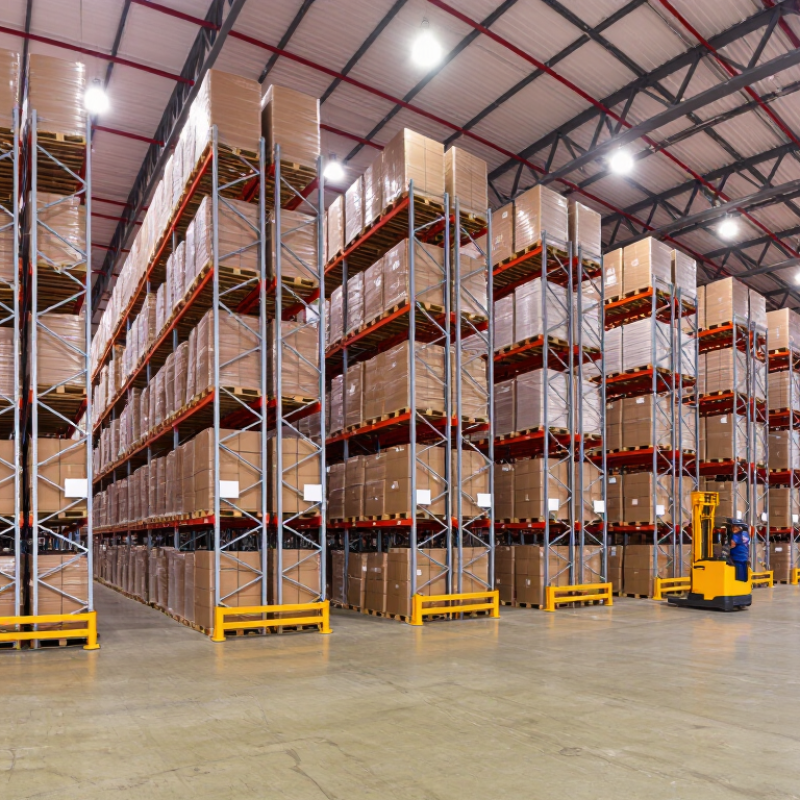
Pallet rack is a steel structure that stores goods on pallets above the floor. Its upright frames support horizontal beams, creating levels for forklift access. Workers place pallets on the beams, where each load rests across two supports. Simple in principle. In practice, beam height, aisle width, pallet dimensions, and forklift reach must work together. A mismatch can make everyday loading awkward or unsafe.

Selective pallet rack is common because forklifts can reach each pallet position directly. Other layouts may store more pallets in less space, but can limit access to individual loads. Capacity matters, too: each bay and beam level must suit the loads actually stored, not just a rough estimate. Clear load notices, secure floor anchoring, and routine checks for bent beams or damaged uprights help keep the system dependable. A small scrape may look harmless. It still deserves attention. Warehouse teams should also consider changing inventory; a layout that worked for uniform cartons may become less practical when pallet sizes vary. The rack is only part of the system—the way people load and inspect it matters just as much.


How Pallet Rack Uses Warehouse Space

Pallet rack uses vertical space to store more goods within the warehouse footprint. Instead of spreading pallets across the floor, operators place them on beams at several levels. A three-level layout, for example, may free floor area for staging or a safer turning zone. The actual gain depends on ceiling height, pallet dimensions, and equipment reach. Aisles still need enough clearance for forklifts and daily traffic. Check rack load ratings and floor conditions before changing a layout. A layout can look efficient on paper and still feel cramped during a busy shift. That detail is easy to miss.

Tips: Measure the tallest load, not just the pallet. Keep sprinklers, lights, and building supports in view. Leave clear access to frequently picked goods. Small changes matter.

Use lower levels for fast-moving or heavier pallets when your handling process supports it. Higher bays can hold slower-moving stock, but only if workers can retrieve it safely and consistently. Marking beam levels and keeping loads within their rated limits helps prevent improvised storage. Review the layout after operations begin; real traffic patterns may differ from the plan. One awkward corner can slow everything down.

Operational Benefits of Pallet Rack Systems

Pallet rack systems use vertical clearance that floor stacking often leaves empty. In a practical layout, a forklift can reach a marked pallet position while nearby stock remains accessible. That improves SKU visibility and can reduce time spent moving one load to reach another. Access stays visible. Selective racks suit operations with many product types, while denser layouts may fit sites holding fewer, higher-volume items. The right choice depends on pick frequency, pallet dimensions, and turning space—not just the number of bays.

MHI’s 2024 Annual Industry Report found that 55% of surveyed supply chain professionals planned to increase investment in supply chain innovation. That figure does not prove racking alone improves performance; it does show why facilities are reviewing how storage and handling work together. Well-planned rack locations can support clearer replenishment routes and more consistent inventory counts. OSHA’s materials-handling standard also requires stored materials to remain stable and secure, making load ratings, visible capacity signs, and routine inspections essential.

The trade-off is real. A rack can create more usable positions, but poor slotting still causes extra travel and congestion. Leave enough aisle width for the actual truck, not the one shown in an old drawing. And check the floor. In daily use, damaged uprights or blocked labels can undo the gains quickly. A layout review should include operators; they often notice awkward turns and hard-to-reach pallets before a spreadsheet does.

Why Choose Pallet Rack for Your Warehouse?

Operational benefit: more pallet positions within the same warehouse footprint.

Illustrative calculation: a 30 m × 20 m warehouse uses 70% of its floor area for storage after allowing 30% for aisles and access. With a 1.2 m² pallet footprint, single-level floor storage provides 350 positions; four storage levels provide 1,400. Actual capacity depends on the warehouse layout, equipment, safety clearances, and rack design.

Common Pallet Rack Types and Their Uses

Why Choose Pallet Rack for Your Warehouse?

Common Pallet Rack Types and Their Uses

Selective racks give forklifts direct access to every pallet, making them practical for mixed products and frequent picking. The trade-off is aisle space. Drive-in racks store deep rows of similar goods, such as seasonal cartons, while reducing the number of aisles. Drive-through racks allow loading at one end and retrieval at the other. Push-back racks suit several pallets per product, while pallet-flow racks use rollers for first-in, first-out rotation. Cantilever racks hold long items like pipe and timber. Access matters.

Rack choice affects safety as well as storage density. The U.S. Bureau of Labor Statistics reported 4.8 nonfatal injury and illness cases per 100 full-time workers in warehousing and storage in 2023, compared with 2.4 across private industry. That difference makes load ratings, clearances, and forklift routes worth careful review. A denser layout may also slow picking; that trade-off is easy to underestimate.

Tips: Map product turnover, pallet dimensions, and forklift turning paths before choosing a system. Place fast-moving products near dispatch, and verify rack loads against engineering documents and site conditions. A small pilot aisle can reveal awkward turns that plans miss.

Key Factors for Choosing a Pallet Rack System

Choosing a pallet rack system starts with the inventory, not the aisle layout. Record pallet dimensions, loaded weight, SKU count, and daily picks. Then check clear height, column spacing, sprinkler clearance, and floor condition. Measure twice. A selective rack gives direct access to each pallet, while denser drive-in layouts trade access for storage capacity. That trade-off matters when product rotation is fast or loads vary. Leave room for forklifts to turn safely; a few extra inches can prevent repeated contact damage.

Use actual load data, not estimates from an old spreadsheet. OSHA’s materials-handling standard, 29 CFR 1910.176(b), requires stored materials to remain stable and secure, so confirm rack capacities and display load information clearly. The 2024 MHI Annual Industry Report found that 55% of surveyed supply-chain professionals planned to spend more than $1 million on supply-chain innovation over the following two years. That figure is not specific to racks, but it signals growing investment in systems that support changing operations. Consider future automation, inspection access, and expansion before fixing the layout. It is easy to overbuild. It is also easy to underestimate growth. Revisit the design with warehouse staff, who know where congestion and awkward picks actually occur.

Why Choose Pallet Rack for Your Warehouse? — Key Factors for Choosing a Pallet Rack System

Pallet Rack System Pallet Access Inventory Rotation Storage Density Best Suited For Key Trade-Off
Selective Pallet Rack Direct access to each pallet from an aisle Supports FIFO or LIFO, depending on stock handling Lower than systems that reduce aisle access Warehouses with many SKUs, frequent picking, or varied pallet turnover Requires more aisle space to provide direct access to every pallet
Drive-In / Drive-Through Rack Forklift enters the storage lane; pallets are stored several positions deep Drive-in commonly operates LIFO; drive-through can support FIFO when loading and unloading from opposite ends High, because fewer aisles are needed Large quantities of the same SKU and relatively low product variety Reduced selectivity; forklift travel within lanes requires careful operating procedures
Push-Back Rack Access from the aisle; pallets move along inclined carts as new pallets are loaded Typically LIFO within each lane Higher than selective rack, with fewer aisles Multiple pallets per SKU where faster access than drive-in storage is useful Lane depth and pallet sequence limit access to individual pallets
Pallet Flow Rack Loading and picking take place at opposite ends of a gravity-flow lane FIFO: the first pallet loaded is generally the first pallet available for picking High for suitable high-volume products Perishable, date-sensitive, or high-throughput inventory with several pallets per SKU Needs compatible pallets and planned lane replenishment; flow components add system complexity
Cantilever Rack Open-front access to stored items Usually managed by item location and handling sequence rather than pallet-lane rotation Useful for long items, but not optimized for standard pallet storage Long, bulky, or irregular loads such as pipe, timber, and sheet material Requires suitable load supports and layout planning for the length and weight of stored items

Selection factors: Compare SKU count, pallet dimensions and weight, inventory rotation needs, order-picking frequency, available building height, forklift type, aisle requirements, and future growth. Rack capacity and configuration must be verified for the actual loads, layout, equipment, and applicable local requirements.

en_USEnglish

PCD Inserts

PCBN Inserts

Solid CBN Inserts

PCD Milling Cutter

PCD Drilling Tools

PCD Reamer

Diamond Special Tool

Diamond Dressers