Why Choose TPV Material for Your Products?
Choosing a material can shape a product’s feel, durability, and manufacturing cost. Tpv Material offers a useful middle ground: the elasticity of rubber with the processing advantages of thermoplastics. It is commonly used in automotive seals, appliance grips, and soft-touch components. Think of a flexible door seal that must recover after repeated compression. Small details matter.
Market data helps explain the interest, but it needs context. Grand View Research valued the global thermoplastic elastomers market at approximately USD 26.16 billion in 2023 and projected a 9.2% compound annual growth rate from 2024 to 2030. That report covers a broader material category, not TPV alone. It signals growing attention to thermoplastic elastomers, rather than proving demand for every TPV grade. The practical case depends on the application. Designers should compare hardness, compression set, temperature resistance, chemical exposure, and bonding requirements against real service conditions. A material that feels right in a sample may perform differently after heat, oils, or repeated flexing. That is easy to underestimate. TPV can also support efficient processing, including reuse of some production scrap, depending on the formulation and process. It is not a universal substitute for rubber or every other elastomer. The sections ahead examine where TPV fits, what trade-offs deserve attention, and how to assess it with reliable product-specific testing.
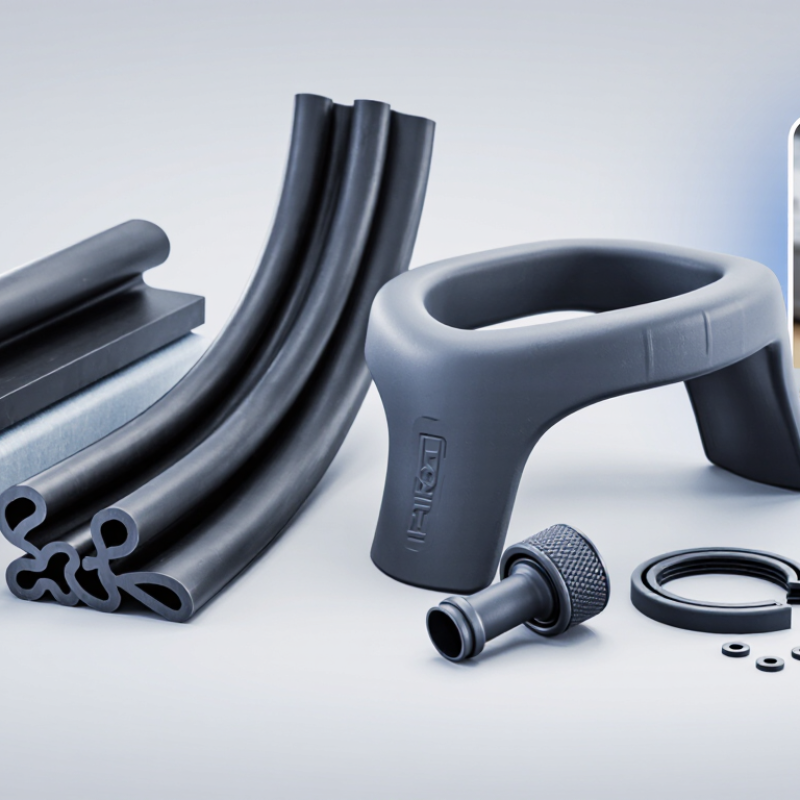
What Is TPV Material?
TPV, or thermoplastic vulcanizate, is a material that combines a flexible rubber phase with a thermoplastic phase. Many common TPVs use EPDM rubber dispersed in polypropylene. During manufacture, the rubber is vulcanized while being mixed, creating small, cured rubber particles within a processable plastic matrix. The result feels elastic but can be shaped using thermoplastic processing methods. It can also be reheated and reshaped under suitable conditions. Not quite rubber. Not quite ordinary plastic.
In a product, TPV may provide a soft grip, a flexible seal, or a weather-resistant boot around a moving part. Think of a gasket compressed against a door frame, then returning toward its original shape. Exact performance depends on the grade, design, and service conditions. Heat, oils, ultraviolet exposure, and repeated flexing can affect materials differently, so a datasheet and application testing matter. TPV is often chosen for its balance of flexibility and manufacturing convenience, but it is not automatically the best option. That distinction matters. A part that looks simple can still fail if its hardness, wall thickness, or fit is poorly matched. Even familiar material names leave room for uncertainty.
Why Choose TPV Material? — What Is TPV?
TPV (thermoplastic vulcanizate) combines a thermoplastic phase with vulcanized rubber particles. This comparison highlights two general material behaviors; specific performance varies by formulation and grade.
TPV can generally be softened and processed again using heat, while conventional crosslinked thermoset rubber cannot be remelted for conventional melt reprocessing. Both can provide rubber-like elasticity.
How Is TPV Made and What Properties Does It Have?
TPV, or thermoplastic vulcanizate, is made by blending polypropylene with EPDM rubber while both are molten. Heat and intense mixing cure the rubber during processing, breaking it into tiny crosslinked particles within a continuous plastic phase. This dynamic vulcanization, described in foundational research by Coran and Patel in Rubber Chemistry and Technology, gives TPV a useful balance: rubber-like flexibility with thermoplastic processing. The details matter.
Grade-specific technical data sheets, commonly tested under ASTM D2240 and ASTM D412, show broad ranges: roughly 40–95 Shore A hardness and 200–600% elongation at break. These are indicative, not guarantees; formulation and test conditions change results. TPV can flex repeatedly, resist moisture, and be remelted for processing. However, heat, oils, and long-term compression can affect performance. I would not choose by a single headline value. Test the actual part under its real temperature and contact conditions.
Tips: Ask for hardness, tensile, and aging results from the same grade. Compare test methods, too. A soft seal in a lab may behave differently after months outdoors.
What Advantages Does TPV Offer in Product Design?
TPV combines rubber-like flexibility with thermoplastic processing, giving product designers room to create soft-touch parts, seals, and protective edges. It can be molded or extruded using familiar equipment, which may simplify production compared with some thermoset rubber processes. Its elastic recovery and resistance to weathering suit parts exposed to repeated bending or outdoor conditions. Small details matter.
Performance depends on the specific TPV grade. Oil, heat, chemical exposure, compression set, and bonding to other plastics all need testing against real operating conditions. A seal that feels soft in the lab may still deform under sustained pressure. TPV is not a cure-all.
Material choices also shape broader product decisions. PlasticsEurope’s 2023 Plastics – the Fast Facts report estimated global plastics production at 400.3 million tonnes in 2022; that figure is not TPV-specific, but it highlights the importance of designing for material use and end of life. For vehicle applications, the U.S. Department of Energy reports that a 10% reduction in vehicle weight can improve fuel economy by 6–8%. That is a vehicle-level benchmark, not a promise that TPV alone will deliver those gains. Designers should compare part weight, durability, processing needs, and realistic recovery options before selecting a grade.
Where Is TPV Commonly Used?
TPV appears in products that need a soft, flexible surface and dependable shape recovery. In vehicles, it is commonly used for door seals, window weatherstrips, grommets, and protective cable jackets. These parts sit near moving panels or exposed edges, where repeated compression and changing temperatures are routine. A well-designed seal can help reduce water entry, wind noise, and rattling.
You will also find TPV in appliance seals, tool grips, sports equipment, and flexible components for industrial machinery. On a tool handle, its soft feel can improve grip during ordinary use. Around a washing machine door, it can provide a flexible sealing surface. The exact performance depends on the grade, part geometry, and exposure conditions. Not every TPV formulation offers the same resistance to heat, oils, or outdoor weather.
The fit matters. In building products, TPV may be used for window and door gaskets that need to flex during installation and use. Its thermoplastic processing can support efficient production, while its rubber-like behavior suits parts that bend repeatedly. Still, choosing material by feel alone is risky. Designers should test finished parts under realistic temperature, load, and aging conditions; small details like wall thickness can change how a component performs.
What Factors Should Guide TPV Material Selection?
Choosing TPV begins with the job the part must do. Map its operating temperature, contact fluids, UV exposure, and expected flexing before comparing grades. A seal near warm oil needs different resistance from a soft-touch grip exposed to sunlight. Check hardness, compression set, and tensile behavior against the part’s actual dimensions and service conditions. A data sheet is only a starting point. Molded thickness and processing can change performance.
The market context is growing: Grand View Research’s Thermoplastic Elastomers Market Size, Share & Trends Analysis Report estimated the global TPE market at USD 27.32 billion in 2023, with a projected 6.4% annual growth rate from 2024 to 2030. This covers TPEs broadly, not TPV alone, so it cannot validate a specific grade.
Test samples using relevant methods, such as compression-set and aging tests, then inspect the finished part after exposure. Fit matters most. Check bonding to adjacent materials, color stability, and cycle time with the intended tooling.
Test the real part. One weak point: early screening may miss long-term chemical exposure, so leave room for follow-up testing.
 Skip to content



 English
 Russian
 German
 Spanish
 French
 Portuguese