SUNDI TOOLS
- Copyright © Wuxi Sundi Precision Tools Co.,LTD All rights reserved.
- Site Map
 Skip to content
For global buyers, choosing Ultrapure Water Equipment is a technical decision, not a simple purchasing exercise. Water quality can affect laboratory results, pharmaceutical processes, electronics production, and daily operating costs. A reliable system should produce consistent water while supporting clear monitoring, maintenance, and documentation.
Experience shows that performance depends on more than a product specification. Feedwater conditions, required purity levels, storage capacity, installation space, and local service access all matter. For example, a system installed beside a busy production line may need compact piping, low noise, and quick filter replacement. Qualified manufacturers should explain these details openly. They should also provide validation records, testing methods, operating guidance, and responsive technical support.
Consistency matters. Yet no system is perfect. Even experienced buyers can underestimate maintenance time or overlook changes in incoming water quality. A polished brochure is not proof of long-term reliability. Buyers should compare verified performance, component quality, user feedback, and total ownership costs. They should ask who will provide spare parts after installation. They should also confirm whether technicians understand regional operating conditions.
The right Ultrapure Water Equipment can protect product quality and reduce avoidable downtime. It can support safer, more efficient operations across different markets. However, the best choice is rarely the cheapest machine. It is the solution that matches real process requirements, offers measurable performance, and remains supportable over time. Careful evaluation builds trust between suppliers and global users. That trust is essential.
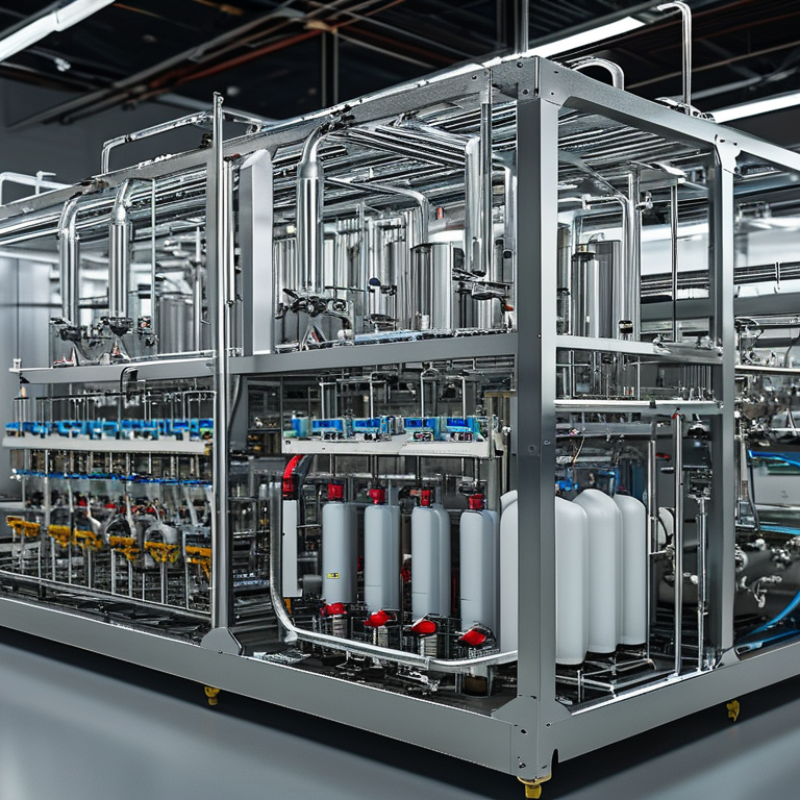
Ultrapure water equipment is an integrated system that removes dissolved salts, organic compounds, particles, microbes, and gases from incoming water. It usually combines pretreatment, reverse osmosis, deionization, electrodeionization, ultraviolet treatment, and final filtration. The exact arrangement depends on the required water grade.
Very pure water.
A well-designed system can produce water with resistivity near 18.2 megohm-centimeters at 25°C. It may also control total organic carbon, particle levels, and microbial contamination. These measurements matter in laboratories, pharmaceutical production, medical research, and precision manufacturing. However, a clean storage tank proves little. Water quality can decline inside pipes, valves, or poorly maintained filters.
Global buyers should examine the complete water pathway, not only the output specification. Ask about feed-water testing, online monitoring, calibration records, sanitization methods, and replacement intervals. Recirculation loops help reduce stagnation, while sealed tanks limit airborne contamination. Local climate, power stability, installation space, and service access also affect performance. In practical operation, maintenance often determines reliability more than the equipment’s initial price. No system stays perfect. Operators must review trends, investigate unusual readings, and improve procedures when results drift.
| Data Dimension | Typical Ultrapure Water Target or Feature | Why It Matters to Global Buyers |
|---|---|---|
| Definition | Water treated to very low levels of ionic, organic, particulate, microbial, and dissolved-gas contamination for sensitive laboratory and industrial processes. | Clarifies that ultrapure water is a controlled quality grade, not simply filtered or bottled water. |
| Resistivity at 25°C | Up to 18.2 MΩ·cm for commonly specified Type 1 ultrapure water. | Indicates very low ionic conductivity and supports reproducible analytical and process results. |
| Conductivity at 25°C | Approximately 0.055 µS/cm when resistivity is 18.2 MΩ·cm. | Provides a simple online indicator of ionic contamination and system performance. |
| Total Organic Carbon (TOC) | Often specified at less than 5–10 ppb, depending on the application and equipment design. | Low organic content helps reduce background interference in chromatography, spectroscopy, and molecular biology. |
| Bacteria | Common system targets are below 1 CFU/mL at the point of use, subject to validation and maintenance. | Reduces the risk of biological contamination in sensitive laboratory workflows. |
| Endotoxins | For endotoxin-sensitive work, systems may be configured to achieve levels below 0.001 EU/mL; the required limit depends on the application. | Important for cell culture, biopharmaceutical research, and other biological applications. |
| Particle Control | Point-of-use filtration commonly uses membranes with nominal ratings such as 0.22 µm or 0.2 µm, depending on the design. | Helps protect instruments, microfluidic channels, and high-sensitivity experiments from particulate contamination. |
| Typical Treatment Stages | Pretreatment, reverse osmosis, deionization or electrodeionization, ultraviolet oxidation, ultrafiltration, and final point-of-use filtration. | A multi-stage design addresses different contaminant types rather than relying on one treatment method. |
| Feed Water Requirement | Usually requires potable or pretreated water with controlled hardness, chlorine, turbidity, and microbial loading. | Suitable pretreatment improves membrane life, reduces operating interruptions, and stabilizes water quality. |
| Monitoring Functions | Common sensors include resistivity or conductivity, TOC, temperature, flow, pressure, and tank level. | Real-time monitoring supports quality assurance, preventive maintenance, and traceability. |
| Point-of-Use Delivery | Recirculating distribution loops, hygienic tubing, low-hold-up outlets, and final filters are commonly used. | Maintains water quality between purification and actual use, especially in centralized facilities. |
| Common Applications | HPLC, LC-MS, ICP-MS, molecular biology, cell culture, analytical chemistry, semiconductor processing, and reagent preparation. | Application-specific purification helps users select the required water grade instead of over- or under-specifying equipment. |
| International Usability | Equipment can be configured for different inlet water conditions, electrical standards, languages, and local service requirements. | Improves installation compatibility and simplifies operation across different countries and facilities. |
| Operating Considerations | Consumable replacement, sanitization, calibration, filter changes, water recovery, and routine quality testing are required. | Total cost of ownership depends on maintenance frequency, water consumption, consumables, and downtime—not only purchase price. |
Note: Performance values are typical target ranges for ultrapure water systems. Exact specifications vary by application, feed-water quality, system configuration, validation method, and point-of-use conditions.

 English
 Russian
  German
  Spanish
  French
  Portuguese