Why Is an SMA Antenna Used in Wireless Devices?
Why do wireless devices use an Sma Antenna? The answer often comes down to a practical balance: compact size, a familiar threaded connection, and straightforward replacement. In a router, radio module, or test instrument, that small metal interface can make antenna changes easier without redesigning the entire enclosure. Small part. Real impact.
Antenna theorist Constantine A. Balanis is known for his work on antenna fundamentals. A useful takeaway from his work is: “An antenna’s performance depends on the whole RF system, not the connector alone.” This is an editorial paraphrase, not a verified verbatim quotation. It matters because an SMA connector does not guarantee strong wireless performance. Frequency range, impedance, cable loss, antenna matching, and nearby metal all affect the result. Even a hand placed beside a compact antenna can alter its behavior.
For product teams, an Sma Antenna can offer a convenient, serviceable connection, especially during prototyping and field testing. Yet the choice is not automatically ideal. A threaded connector adds some bulk, and a poorly matched antenna may waste signal despite a precise-looking fit. Designers should check the antenna specifications, device layout, and intended operating band together. The connector is only one detail—but an easy one to overlook.
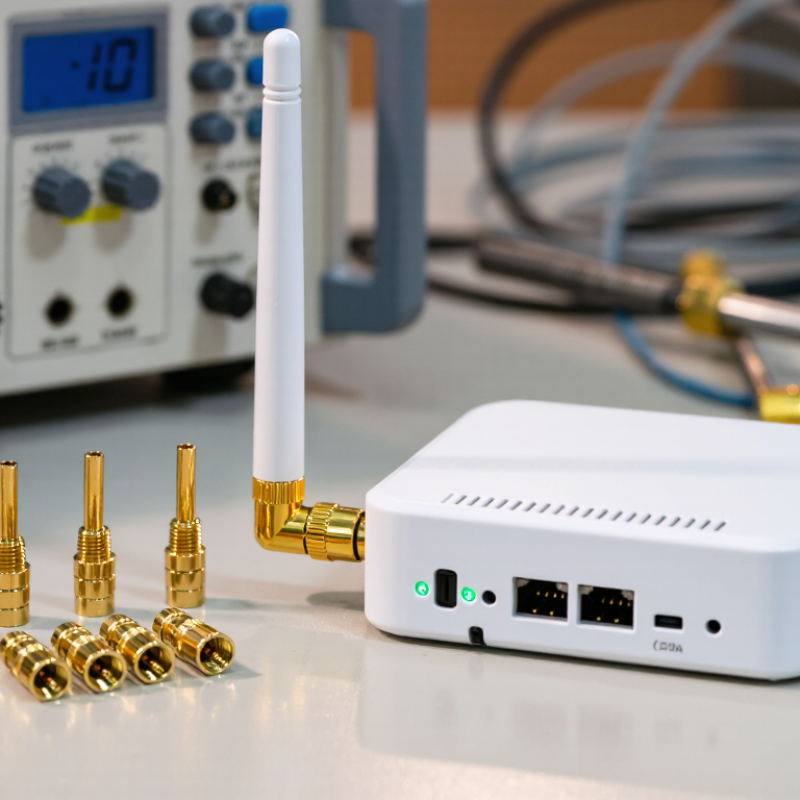
SMA Connectors and Their Role in Wireless Antennas
SMA connectors give wireless antennas a compact, threaded connection to a device’s coaxial feed. The IEC 61169-15 standard defines the SMA interface as a 50-ohm RF coaxial connector. That impedance matters: a mismatch can reflect part of the signal instead of delivering it to the antenna. The connector is also detachable, which helps during antenna swaps, bench testing, and enclosure repairs. A small, practical benefit.
3GPP TS 38.104 places many 5G New Radio operating bands within FR1, from 410 MHz to 7.125 GHz. Conventional SMA assemblies may be rated up to 18 GHz, but the actual ceiling depends on the connector, cable, and assembly quality.
The SMA alone does not guarantee good wireless performance. A loose coupling, poorly routed cable, or antenna detuned by a nearby metal panel can still cause trouble.
I have seen connector choice treated as a minor detail; that assumption deserves a second look. On a compact device, even a few millimeters of clearance around the connector can affect assembly and antenna placement.
How SMA Interfaces Carry Radio-Frequency Signals
An SMA antenna connects to a radio through a threaded, 50-ohm coaxial interface. The center conductor carries the RF signal, while the surrounding metal provides its return path and shielding. The signal travels as an electromagnetic field between these conductors, not merely as current moving down a wire. Small parts matter. IEC 61169-15:2015 specifies the SMA interface and its 50-ohm characteristic impedance. That impedance helps limit reflections when the antenna, cable, and radio are properly matched.
At the device, the connector’s center pin meets a socket inside the radio’s RF front end. A firm threaded connection helps keep the contact stable; a loose or damaged interface can disturb the signal. The relevant frequency depends on the connector and device design. IEEE 802.11-2020 covers wireless operation in the 2.4 and 5 GHz bands, where even small mismatches can affect performance. In practice, that tidy model has limits: cable length, bends, and nearby metal also shape what reaches the antenna. A connector can look secure and still have a poor electrical contact.
Design Features That Suit SMA Antennas to Wireless Devices
An SMA antenna’s appeal begins with its connector: a threaded interface that holds a coaxial cable firmly against vibration and repeated handling. IEC 61169-15 defines the SMA connector interface, commonly used in 50-ohm RF systems. In a compact router or sensor, that familiar impedance helps engineers connect the antenna path to matching circuitry without adding an unusual interface. Small, but not weightless. The metal connector and cable still need space and mechanical support.
Replaceability is another practical design feature. A technician can swap an antenna or test cable without redesigning the board, which helps during prototyping and field servicing. Ericsson’s June 2024 Mobility Report forecasts 5.6 billion 5G subscriptions by 2029, about 60% of mobile subscriptions; more wireless equipment makes serviceable RF connections useful. SMA performance depends on the antenna, cable, installation, and frequency band—not the connector alone. A tight thread cannot fix poor impedance matching or a badly placed antenna. It can also loosen if assembly is careless. That trade-off deserves attention: SMA offers a sturdy, standardized connection, but its bulk may not suit very thin devices.
Common Wireless Devices That Use SMA Antennas
Why Is an SMA Antenna Used in Wireless Devices?
Common Wireless Devices That Use SMA Antennas
SMA antennas appear on Wi-Fi routers, cellular gateways, industrial telemetry units, and some radio test equipment. Their threaded connectors hold firmly, which helps when devices face vibration or need a removable antenna. In a workshop, that may mean replacing a bent antenna without opening the enclosure. Small connector. Real trade-offs.
The GSMA’s Mobile Economy 2024 report projects cellular IoT connections will rise from 3.5 billion in 2023 to 5.8 billion by 2030. Ericsson’s June 2024 Mobility Report forecasts 6.3 billion 5G subscriptions by 2030. These figures show why flexible wireless hardware matters, though they do not mean every connected device uses SMA. Many compact products use internal antennas or other connector types.
An SMA socket is common on gateways that need external antennas for better placement, such as units mounted inside metal cabinets. It also lets technicians swap antennas for different frequency bands or test setups. One detail is easy to overlook: a matching connector does not guarantee matching performance. Check the device’s supported bands, antenna impedance, and power limits. Cable length matters, too; a long, thin lead can weaken the signal. I have seen connector choice treated as an afterthought, and that can make a sound radio installation frustrating.
Key Trade-Offs When Choosing an SMA Antenna
Why Is an SMA Antenna Used in Wireless Devices?
An SMA connector gives engineers a compact, threaded way to attach an external antenna. The real choice is not simply SMA or no SMA. It is a trade-off between flexibility, radio performance, cost, and mechanical space. GSMA’s Mobile Economy 2024 reports 1.6 billion 5G connections worldwide at the end of 2023, with 5.5 billion forecast by 2030. That growth makes frequency coverage important: one SMA antenna cannot efficiently serve every band. Check its stated frequency range against the device’s actual operating bands.
Cable length and placement matter, too. A thin coaxial cable can lose signal, especially at higher frequencies, while a connector adds bulk and another possible point of wear. In a metal enclosure, an external antenna may improve reception, but a poorly placed antenna can still perform badly. Small details matter. Test the assembled device, not just the antenna alone. It is tempting to judge by peak gain, but radiation pattern, matching, and nearby metal can change real-world results.
Tips: Keep the coaxial lead short, tighten the connector carefully, and compare received signal strength in the final enclosure. The FCC’s United States Frequency Allocations chart lists the 2.4 GHz ISM band as 2400–2483.5 MHz; verify local allocations and device requirements before selecting an antenna. A bench test helps, but body position and installation can still shift results.
Why Use an SMA Antenna? Antenna Length vs. Frequency
A detachable SMA connection makes it practical to replace or position an antenna. The ideal free-space quarter-wave radiator gets shorter as operating frequency increases.
Lengths are calculated using the speed of light in free space and are approximate. Real antennas may differ because of construction, tuning, nearby materials, and enclosure effects. SMA connectors offer convenient connectivity, but antenna size, bandwidth, efficiency, and installation space remain important trade-offs.
 Skip to content



 English
 Russian
 German
 Spanish
 French
 Portuguese