...

Why Is a Turf Brush Essential for Artificial Grass?

Artificial grass looks low-maintenance, but its surface still responds to use, weather, and time. Foot traffic can press blades flat, while leaves, dust, and small debris settle between them. A Turf Brush helps lift the fibers and redistribute loose infill, keeping the surface more even underfoot. The difference is visible after brushing: blades stand higher, and worn lanes look less compressed.

Professional guidance treats maintenance as part of field performance, not just appearance. FIFA’s Quality Programme for Football Turf evaluates fields using measures such as ball roll, shock absorption, and rotational resistance. The Synthetic Turf Council’s maintenance guidance also recommends routine grooming and debris removal. These sources do not mean that brushing alone guarantees a safer or longer-lasting surface. They show why consistent care matters.

A brush is a simple tool. Its value depends on using it correctly. Brush with the pile, avoid excessive force, and choose equipment suited to the turf and infill. On a small backyard lawn, a manual brush may be enough; a larger sports surface may need specialized equipment and a documented maintenance schedule. Check the manufacturer’s instructions, too. Products differ.

Still, brushing is not magic. It cannot repair damaged seams, correct poor drainage, or restore infill that has been lost. That part is easy to overlook. For homeowners and facility managers, understanding when and how to use a Turf Brush can help maintain a cleaner, more consistent surface—and reveal when a deeper inspection is needed.
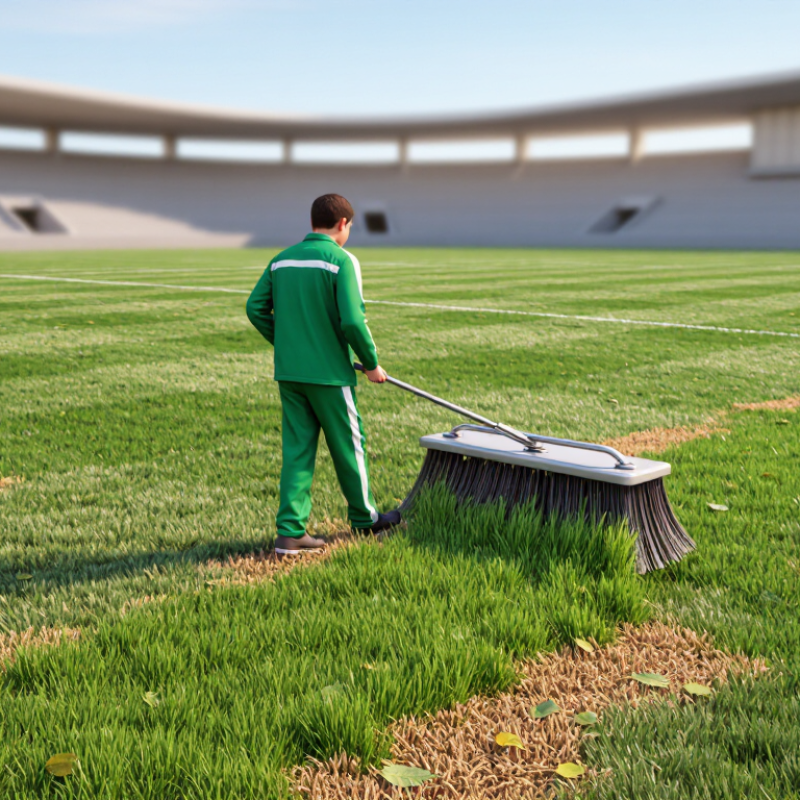
Why Is a Turf Brush Essential for Artificial Grass?

What a Turf Brush Is and How It Works

A turf brush is a hand-held or powered tool with stiff, flexible bristles designed to move across artificial grass. The bristles catch between the synthetic blades and lift fibers that have flattened under footsteps, patio furniture, or regular play. Many brushes also help loosen dry leaves and redistribute infill, the small granules that support the grass blades.

The direction of the stroke matters. Moving against the grass’s natural lay can raise flattened fibers, while gentle, overlapping passes help avoid obvious stripes. Check the turf’s care instructions before choosing a stiff brush or powered tool; excessive force may disturb the backing or scatter infill. Start with a small area. Watch how the pile responds.

It is not magic. Corners and shaded spots may still look uneven after brushing, and stubborn debris may need to be picked out by hand. A useful brush has bristles firm enough to reach the pile, but not so harsh that they scrape or tug. Used carefully, it restores a more upright appearance and makes routine surface care easier.


How Foot Traffic Affects Artificial Grass Fibers

Foot traffic bends artificial-grass fibers again and again. At gates, sidelines, and play areas, the blades can lie in one direction, making patches look dull or matted. Cleats and turning movements add twisting forces, while grit and leaves can settle between the fibers. The wear is gradual, but busy routes often show it first. Small changes matter.

The FIFA Quality Programme’s Handbook of Test Methods includes a Lisport XL wear test of 20,200 cycles to assess football turf under repeated mechanical stress. That laboratory figure is not a direct count of human footsteps; field conditions, footwear, and maintenance differ. Still, it shows why repeated loading deserves attention. A suitable turf brush can lift flattened fibers and help spread infill more evenly. Brush with moderate pressure, especially across high-traffic lanes, and follow the surface manufacturer’s care guidance. Too much force may disturb infill or stress the backing. I still find this easy to underestimate: a quick visual check can miss fibers leaning beneath the surface. My view may be cautious, but checking after heavy use is better than waiting for a visibly worn strip.

How Brushing Restores Turf Appearance and Resilience

A turf brush helps artificial grass recover its shape after foot traffic presses the fibers flat. Brushing lifts the blades so they catch the light more evenly and look less matted. That matters.

Work in small sections, using steady strokes against the direction the fibers lean. On a lawn with visible traffic lanes, such as the path between a patio and gate, those areas may need more attention. Brush gently; aggressive scraping can disturb infill or strain the grass backing. A stiff, suitable brush is useful, but check the turf maker’s care guidance before choosing one.

Brushing can also help distribute loose infill more evenly, supporting the blades so they stand upright. The result is a springier surface underfoot and a more consistent appearance. It is easy to overdo it. If the fibers begin to look stressed or infill shifts into piles, pause and reassess your technique. Brushing will not correct poor drainage, damaged seams, or worn turf, and it may not make every flattened patch look new. Regular, light care usually works better than waiting until the lawn looks tired.

Why Is a Turf Brush Essential for Artificial Grass?

Brushing helps lift flattened fibers and can redistribute infill or dislodge loose debris. It cannot repair structural damage or reverse UV degradation.

How to read: “Yes” means brushing can directly help address the condition; “No” means brushing is not a remedy. Results depend on the turf system, infill, and brush type.

How Regular Brushing Removes Debris and Supports Drainage

A turf brush does more than make artificial grass look tidy. Its bristles lift flattened blades and loosen leaves, seed pods, and small bits of soil before they settle into the pile. After windy weather, a few minutes of brushing can reveal debris that is easy to miss at ground level. Brush in different directions, using steady, gentle strokes. Heavy pressure may disturb the infill or strain the backing.

That matters for drainage. Water usually passes through the turf’s perforated backing and into the prepared base below. When debris and matted fibers collect at the surface, they can slow water movement and hold moisture around the blades. Clear the surface regularly, especially near garden beds, where clippings and soil gather. After rain, check for puddles that remain longer than expected. They may point to compacted infill, a blocked outlet, or a base problem; brushing alone will not fix those issues.

I used to think a quick sweep was enough. Not always. A brush suited to synthetic turf can reach between the blades without scraping the backing. Use lighter strokes around seams and edges, and remove loosened debris instead of pushing it into another corner. Small routines help, though the right frequency depends on trees, pets, and foot traffic.

How to Choose and Use a Turf Brush Effectively

Choose a brush with soft or medium synthetic bristles, a broad head, and a handle that lets you work upright. Avoid metal bristles; they can damage fibres and backing. Match the brush to the pile: a stiff brush may suit dense, short grass, while longer blades need gentler contact. FIFA’s Quality Programme for Football Turf uses a 4–8 metre ball-roll range as a performance benchmark. That test does not set a brushing schedule, but it shows why even, upright fibres matter on sports surfaces.

Brush against the pile, then lightly across it, using short, steady strokes. Work in small sections and ease off where the fibres already stand upright. Clear leaves and grit first; brushing debris into the infill makes cleanup harder. Check the surface instructions before using powered equipment, and watch for exposed backing or displaced infill. If infill gathers in ridges, redistribute it gently rather than forcing the brush through. It is easy to over-brush. A few passes may be enough for a lightly used lawn, while busy play areas need more frequent checks. Record what you notice: flattened paths, loose seams, or thin infill are useful clues, though brushing alone cannot fix structural damage.

Why Is a Turf Brush Essential for Artificial Grass? - How to Choose and Use a Turf Brush Effectively

Task or consideration Suitable brush choice How to use it Practical guidance
Lift flattened grass blades A turf brush with firm, synthetic bristles Brush against the direction in which the blades are leaning, using steady, moderate strokes. Useful on areas compressed by foot traffic or garden furniture. Avoid excessive force.
Choose bristle stiffness Medium-firm bristles for general cleaning and grooming Test the brush on a small, inconspicuous area before treating the whole lawn. Very stiff or abrasive bristles may damage grass fibers or backing; check the turf maker’s care instructions.
Remove leaves and loose debris A soft-to-medium synthetic-bristle brush or a leaf rake designed for artificial turf Sweep debris gently toward an edge, then collect and dispose of it. Regular removal helps prevent organic debris from accumulating among the fibers.
Work around infill A brush suitable for the turf system and its infill type Use light, even strokes and avoid aggressively sweeping infill out of the lawn. Some artificial lawns contain sand or other infill. Follow the installation and maintenance guidance for that system.
Refresh high-traffic areas A hand brush for small spots or a suitable turf brush with a long handle for larger areas Brush in several directions where needed, then finish with strokes that lift the blades. Treat visibly flattened sections as needed; brushing frequency depends on traffic, debris, and the turf’s condition.
Select a handle and brush head A comfortable handle length and a head sized for the area Choose a tool that lets you work without straining or applying uneven pressure. A compact brush offers control around edges; a wider head can cover open areas more quickly.
Care for the brush A clean, undamaged brush with intact bristles Remove trapped leaves and dirt after use; rinse the brush when appropriate and let it dry. Do not use a brush with broken or sharp parts that could snag or scratch the turf.
en_USEnglish

PCD Inserts

PCBN Inserts

Solid CBN Inserts

PCD Milling Cutter

PCD Drilling Tools

PCD Reamer

Diamond Special Tool

Diamond Dressers