...

What Is a Zigbee Fan Coil Thermostat and How Does It Work?

A zigbee fan coil thermostat is a smart wall controller designed for fan coil heating and cooling systems. It connects to a Zigbee network instead of relying only on traditional wired controls. In a hotel room, apartment, or office, it can measure room temperature and adjust the fan speed, valve, or operating mode.

The process is practical. A built-in sensor checks the air temperature near the thermostat. The device compares that reading with the selected setpoint. It then sends control instructions through a compatible relay, actuator, or fan coil controller. Zigbee communication can also report temperature, operating status, and faults to a gateway or building management platform.

Small details matter.

Installation experience often reveals the difference. A thermostat placed near a sunny window may read higher temperatures than the occupied area. Poor sensor placement can create unnecessary cooling or uncomfortable airflow. Network performance also depends on Zigbee channel settings, device distance, and powered routers. Compatibility should never be assumed. Different manufacturers may support different profiles, endpoints, or gateway functions.

This guide explains the components, communication process, control logic, and practical installation considerations behind a zigbee fan coil thermostat. It also examines limitations, including delayed responses, wireless interference, and inaccurate readings. Some systems appear simple but require careful commissioning. That is where many product descriptions become too optimistic. Reliable performance depends on verified specifications, qualified installation, and testing under real operating conditions. A properly configured system can improve comfort and provide useful energy data, but it is not a complete solution by itself.
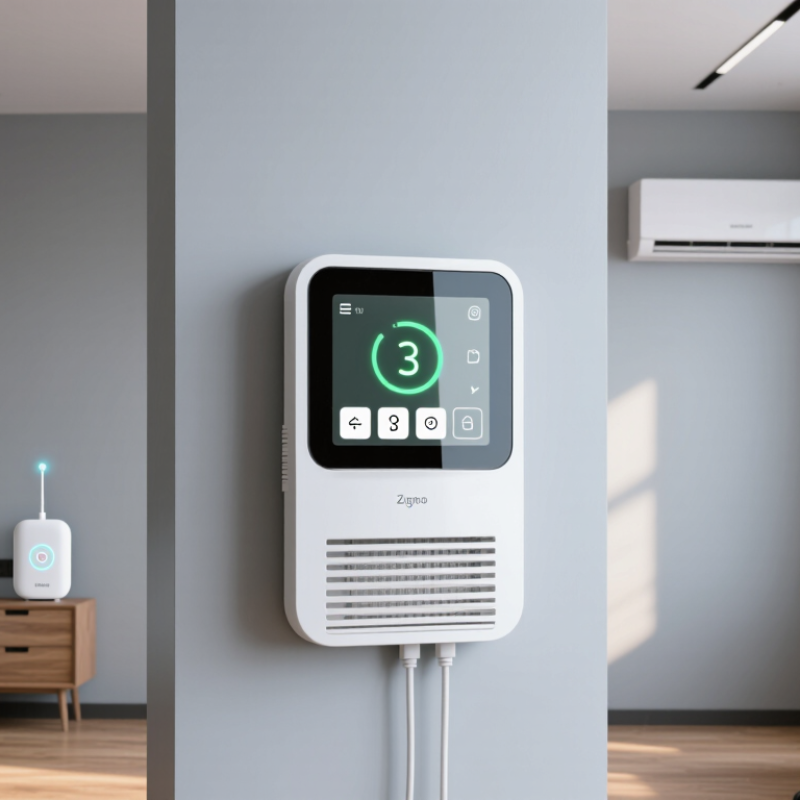
What Is a Zigbee Fan Coil Thermostat and How Does It Work?

What Is a Zigbee Fan Coil Thermostat?

A Zigbee fan coil thermostat is a wall-mounted control device for heating and cooling units. It uses the Zigbee wireless protocol to exchange data with a compatible coordinator or home automation hub. Unlike a basic thermostat, it can manage several fan speeds and control heating or cooling valves.

The thermostat measures room temperature through an internal sensor. A user selects a target temperature, operating mode, and fan speed. The device then sends commands to the fan coil controller through a low-power mesh network. Nearby Zigbee devices can relay signals, which may improve coverage in apartments, hotels, and offices. However, Zigbee does not automatically mean universal compatibility. The thermostat, hub, wiring, and fan coil controller must use matching profiles and electrical specifications.

In practical installations, correct wiring matters more than a polished interface. Some systems use relays, while others require dedicated valve outputs or low-voltage terminals. A technician should check the fan motor type, valve voltage, neutral connection, and supported fan stages before installation. A room sensor can also read inaccurately near sunlight, doors, or warm equipment. Small errors become noticeable.

The technology is useful, but not magical. A weak mesh network can cause delayed commands. Hub settings may also confuse new users. Testing each mode manually remains sensible, even when the thermostat appears to work.


Key Components and Their Functions

A Zigbee fan coil thermostat controls room temperature through a wireless network. It is designed for fan coil units with cooling, heating, or both. The thermostat measures room conditions, compares them with the setpoint, and sends control signals. Unlike a basic wired controller, it can exchange data with a gateway or building management system. Zigbee provides low-power communication and supports mesh networking. Signals may travel through nearby compatible devices when direct range is limited. That sounds simple. It is not always simple.

The temperature sensor is the measurement point. Some models also sense humidity, which helps reduce discomfort. A microcontroller interprets sensor readings and user settings. It decides when to open a water valve or start the fan. Relay or triac outputs operate the valve, compressor enable circuit, and fan-speed stages. A display and buttons provide local access. The Zigbee radio manages pairing, addressing, and two-way status reporting. Power circuitry converts the supply into safe voltages for the electronics. Battery models use sleep modes to reduce consumption. Frequent wireless updates can still shorten battery life. This trade-off is easy to overlook.

During operation, the sensor samples the room at intervals. The controller applies temperature thresholds or proportional logic to reduce rapid switching. It then commands low, medium, or high fan speed, depending on the design. A valve actuator regulates chilled or heated water through the coil. The gateway can record alarms, schedules, and communication faults. Correct wiring remains essential. Zigbee cannot fix a wrongly sized valve or poorly balanced airflow system. Installers should verify sensor location, fan outputs, neutral availability, and fail-safe behavior. A thermostat near a supply-air draft may produce misleading readings. Testing only the app is not enough. Physical airflow still matters.

How Zigbee Communication Works

A Zigbee fan coil thermostat measures room temperature and sends control commands through a low-power wireless network.

Unlike a basic wireless controller, it does not usually communicate directly with every device. Zigbee uses a coordinator and nearby routers to form a mesh network. Short packets move from one device to another until reaching the thermostat, fan coil controller, or gateway.

The process begins during pairing. The thermostat joins the secured network and receives an address. It then reports temperature, operating mode, and battery status at set intervals.

When the room becomes warmer than the target, it can send a command to start cooling or adjust the fan speed. Zigbee commonly operates at 2.4 GHz, so walls, metal cabinets, and nearby wireless equipment can affect reliability. Keep the signal path clear.

Mesh networks can repair themselves. If one router stops responding, another route may carry the message. This helps in apartments, hotels, and office floors with several rooms.

However, recovery is not instant. I have seen delayed commands when devices were installed too far apart or when the network had too few powered routers. That detail is easy to overlook.

Zigbee also uses encryption and device authentication, but secure installation still matters. A thermostat should be paired through controlled procedures, with firmware and network settings checked by a qualified technician. The system saves energy through scheduled temperature changes, yet poor sensor placement can produce misleading readings beside a window or supply vent. Testing real airflow remains essential.

How the Thermostat Controls a Fan Coil Unit

A Zigbee fan coil thermostat is a wireless controller for heating and cooling units. It measures room temperature, compares it with the selected setpoint, and sends commands through a Zigbee network. The thermostat usually communicates with a gateway, not directly with the fan motor. The gateway then operates the valve actuator and fan-speed relays.

Control is continuous, but not always smooth. When the room becomes warmer than the cooling setpoint, the thermostat opens the chilled-water valve and starts the fan. It may select low, medium, or high speed according to the temperature gap. During heating, it opens the hot-water valve instead. A short delay, called hysteresis, prevents rapid switching and noisy cycling. Some systems also use occupancy sensors, schedules, and window contacts.

Small details affect performance. A thermostat beside a supply grille can read falsely low. Wireless interference can also delay commands. I have found that commissioning is often treated as an afterthought, although it shapes comfort more than the app interface. The International Energy Agency reported that buildings consume about 30% of global final energy, making practical control important. The U.S. Department of Energy states that suitable temperature setbacks can reduce heating and cooling energy use by up to 10%. That figure is not guaranteed in every room. Poor sensor placement, incorrect valve wiring, or a badly balanced fan coil can erase the expected savings.

What Is a Zigbee Fan Coil Thermostat and How Does It Work? - How the Thermostat Controls a Fan Coil Unit

Data Dimension Typical Information How It Relates to Fan Coil Control
Device type Wireless room thermostat using the Zigbee mesh protocol Measures room conditions, receives control commands, and sends operating requests to a compatible controller or actuator.
Controlled equipment Fan coil unit with a fan and hydronic heating or cooling coil The thermostat controls air circulation and water-valve operation to maintain the selected room temperature.
Temperature sensing Electronic room-temperature sensor; some installations also use a remote or return-air sensor The measured temperature is compared with the user-selected setpoint to determine whether heating or cooling is required.
Temperature setpoint User-adjustable target temperature; the exact adjustment range depends on the thermostat configuration A temperature difference, commonly called the control error, determines when the valve and fan should operate.
System configuration Two-pipe or four-pipe fan coil system A two-pipe system normally changes between heating and cooling according to seasonal water availability, while a four-pipe system can provide separate heating and cooling circuits.
Operating modes Off, heating, cooling, automatic changeover, fan-only, and automatic fan operation The selected mode limits which valve or relay can be energized and prevents conflicting heating and cooling commands.
Fan-speed control Low, medium, high, or automatic speed; some units support variable-speed control Automatic speed selection increases airflow when the temperature difference is larger and reduces airflow as the room approaches the setpoint.
Valve control On/off valve control or proportional control, depending on the actuator and controller The valve regulates or starts/stops chilled-water or hot-water flow through the coil, which changes the temperature of the supply air.
Typical control sequence Sense temperature → compare with setpoint → request heating or cooling → open valve → start fan The controller may use a short delay so that the fan starts after the coil begins receiving conditioned water, helping reduce drafts.
Zigbee communication Low-power wireless communication through a Zigbee coordinator or gateway Setpoints, schedules, mode commands, measured temperatures, and fault information can be exchanged with a building-control system.
Mesh-network behavior Powered Zigbee devices may relay messages for other devices, depending on their role Additional routers can improve network coverage, but the thermostat still requires compatible network settings and a suitable coordinator.
Power options Battery-powered or mains-powered, depending on the installation design Battery operation simplifies wall installation but requires battery monitoring; mains-powered units can support continuous communication and local outputs.
Fan interlock Control logic that coordinates fan operation with valve status It can stop the fan when there is no heating or cooling demand and help prevent airflow across an inactive coil.
Scheduling and energy saving Time schedules, occupancy settings, setback temperatures, and eco modes Reducing heating or cooling during unoccupied periods can lower energy use without requiring continuous manual adjustment.
Control deadband A small temperature range around the setpoint where no heating or cooling action is requested The deadband reduces rapid switching of valves and fan stages when the room temperature is close to the target.
Installation requirements Correct thermostat location, compatible actuator or relay outputs, suitable power supply, and Zigbee network coverage Poor sensor placement, blocked airflow, incompatible wiring, or weak wireless coverage can cause inaccurate readings or unreliable control.
Main benefits Wireless installation, centralized monitoring, flexible scheduling, and room-by-room control The thermostat combines local temperature regulation with wireless building-management functions while avoiding the need for a dedicated wired communication cable to the room sensor.

Installation, Setup, and Daily Operation

A Zigbee fan coil thermostat links room temperature control with a low-power wireless network. Installation begins with switching off the electrical supply completely. Power off completely. A qualified technician should identify the fan-coil type, valve wiring, and available fan-speed terminals. Two-pipe and four-pipe systems may require different settings. The thermostat must sit away from direct sunlight, supply vents, and cold exterior walls.

After mounting, connect the designated wires according to the equipment diagram and local electrical rules. Secure each terminal firmly. Loose connections can cause unstable fan operation or damage. Restore power, select the correct heating or cooling mode, and configure the valve and fan stages. The Zigbee gateway then enters pairing mode, while the thermostat is added through the control application. Keep the devices nearby during pairing. Metal cabinets and thick concrete can weaken the signal.

Daily operation is usually simple. Adjust the setpoint, choose automatic or manual fan speed, and create schedules for occupied hours. In automatic mode, the fan may start slowly while the valve responds to room temperature. That delay is normal. Check the measured temperature against a trusted room thermometer during setup. My first calibration was slightly high because the sensor sat near a warm cable. Small errors matter. Review the schedule after several days, especially in rooms with changing sunlight or frequent door opening. Replace batteries when alerts appear, and keep the gateway powered during software updates. Not always perfect.

en_USEnglish

PCD Inserts

PCBN Inserts

Solid CBN Inserts

PCD Milling Cutter

PCD Drilling Tools

PCD Reamer

Diamond Special Tool

Diamond Dressers